Showing posts with label Review: Literary Fiction. Show all posts

Wednesday, August 26, 2026

TLC BOOK TOUR: A Thousand Painted Hours by Barbara O'Neal


Synopsis

An epic, emotionally charged novel about love, art, and survival spanning 1900s colonial India to Blitz-era London by the USA Today bestselling author of When We Believed in Mermaids.

In the shadow of the London Blitz, artist Elsie Turner clings fiercely to her canvases, refusing to let war dim the colors that define her. The bombs test her nerve, but the struggle also stirs memories of her golden youth in India and of the long-lost love of her life.

The daughter of a British civil servant in the Himalayan station of Nainital, Elsie crosses cultural divides to forge an unlikely bond with Tanveer Singh, a Sikh prince with hopes, dreams, and far-reaching ideas. What begins as shared sketchbooks and stargazing becomes first love and a secret correspondence. When Elsie’s father is summoned to England, Elsie is severed from the world she knows—and is determined to preserve it through both her art and a connection with Tanveer that endures through the most tumultuous years of their lives.

Across four decades and two continents, Elsie navigates a journey from lush colonial India to war-torn London, amid landscapes of beauty, protest, and peril. As past and present collide, the most impossible choices and sacrifices are yet to be made in the name of love, war, and survival.

Format 543 pages, Paperback
Published August 11, 2026 by Lake Union Publishing
ISBN 9781662514975 (ISBN10: 1662514972)


About the Author

Barbara O’Neal is the author of more than a dozen award-winning, bestselling novels, including the runaway bestseller, When We Believed in Mermaids, which has been published in 21 countries and spent many months on both the most sold and most read Amazon Charts, as well as the Wall Street Journal, USA Today, and Washington Post bestseller lists. Barbara is an avid traveler and passionate cook, and discovered the Oregon coast on a pandemic-era trip with her husband. She now lives on that rocky, moody coast in a quirky beach house and writes her books from a room overlooking the sea. She lives with her British husband, who has promised to never lose his accent, and their cats and dogs.

Learn more about the author


My Thoughts
London, 1940

You will think this a story of the war. The war, as if it is the only one, when this century has been so filled with them.

It is not about war. It is about the opposite.

My story begins with cyanide tablets.

A Thousand Painted Hours tells the story of Elsie, the daughter of a British earl, and Tanveer, the son of a Maharajah, and their lifelong, unbreakable devotion to one another.

Elsie is born in India to British parents, and it's there she meets the Maharajah's children who live nearby. The older sister, Gurdaya, is intelligent, disciplined, and every inch the obedient daughter of India. Tanveer is thoughtful, compassionate, and philosophical — and he and Elsie become fast friends almost immediately.

Their friendship deepens into love as the years pass and they grow into adulthood, until the day Elsie is forced to leave India, heartbroken and despondent, to return to London when her father must take his place as Earl of Herewich.

The novel moves between several timelines, but primarily India in the 1910s and England in 1940, during the relentless German bombing campaign known as the Blitz. As Elsie matures, so does her artistic talent, and through her painting she comes to understand herself and her own capacity for self-expression. The narrative is woven through with letters exchanged between the main characters — most often between Elsie and Tanveer themselves.
I fingered the edges, imagining that I could feel his words against my skin, words he'd written in the Urdu script, which we had learned first as a challenge, then later to hide the words of our communication. His father spoke and wrote four languages, but had not bothered with the written script of Urdu. My mother had some skill with Hindustani, even some Persian, but she could not write Urdu. It had become our secret code.
One of my favorite details is the ritual Elsie and Tanveer keep throughout their letters: each one always includes "one beautiful thing" the writer witnessed — a small act of gratitude offered up no matter how broken or despondent they might be. Across the years and through every trial, they never stop reaching for something beautiful to give each other. Their bond is something private and sacred, a thing they protect and treasure above all else.
"...I had an image of a carved box, inlaid with ivory, that held this secret thing, the thing we barely acknowledged even to each other anymore. It is the only thing that really belongs to me." 

"Not your paintings?" 

"Yes, of course the paintings." I grappled with what I meant, what I could say without giving away that sense of private connection, a thing that both lived in the world and not. "But paintings are meant to be public. Even if they're vulnerable or revealing, the entire purpose of them is to communicate with someone else."
The novel also wades into deeper socio-political waters — women's equality, India's caste system, and the toll of war. Elsie chafes against the confines placed on women in the early twentieth century, hemmed in by social propriety and family obligation, in an era when male heirs alone carried on the family name and inherited its wealth and title, while daughters were left to arranged marriages and quiet, uneventful lives.
"You have the freedom to explore your art and your own mind. You have freedom of movement and even the ability to defy the powers that would shape you."
Elsie and Tanveer feel destined for each other and destined to be kept apart in equal measure. Theirs is a love that feels preordained even as the world conspires against it — two World Wars, India's fight for independence from British colonial rule, and the rigid expectations that come with royal titles all stand between them, obstacle after obstacle.

I became a fan of Barbara O'Neal after reading The Last Letter of Rachel Ellsworth. Her gift for setting — the smells, the sights, the people, the food — always leaves me longing to pack a bag and go exploring. She has a rare eye for the human condition and for the private, interior world each of us carries.

Five words: longing, connection, "one beautiful thing"

Buy Now:
Check the author's website

My Final word: A Thousand Painted Hours is a story of longing and tenderness that burns with passion — not only of the body, but of the mind and soul. The connection between Elsie and Tanveer is the deepest kind: pure, selfless, and unyielding against the test of time. Barbara O'Neal has a way of touching something in me that few authors can, and I can't wait to read more of her work.
"Here we are," I said, and let myself fly into the darkness lit by ten thousand stars.

Trigger Warnings:
War, domestic violence, alcohol abuse, PTSD

My Rating:


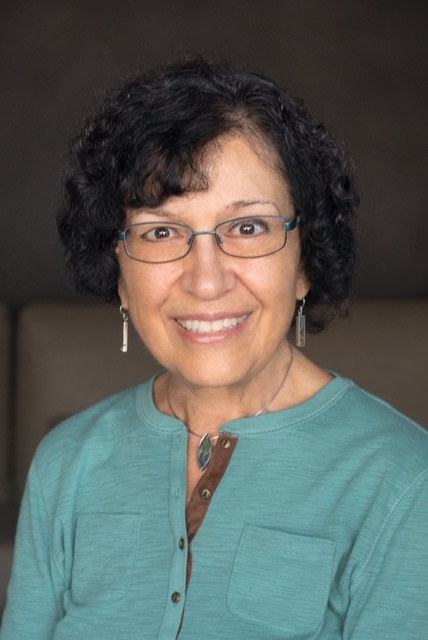
The Cerebral Girl is a middle-aged blogger just digging her way out from under a mountain of books in the deep south of Florida.

I received a copy of this book to review through TLC Book Tours and the publisher in exchange for my honest opinion. I was not financially compensated in any way, and the opinions expressed are my own and based on my observations while reading this novel. The book that I received was an uncorrected proof, and quotes could differ from the final release.  

Monday, April 20, 2026

REVIEW: Sky Full of Elephants by Cebo Campbell


Easy to forget that half the world died. But then again, Charlie noted, neither grief nor calamity had ever stopped the joy of black people. We smiled through the worst the world had to offer, he thought. Smiled even when our lips bled. 

(Sky Full of Elephants, page 6)


Synopsis

In a world without white people, what does it mean to be Black?

One day, a cataclysmic event occurs: all of the white people in America walk into the nearest body of water. A year later, Charlie Brunton is a Black man living in an entirely new world. Having served his time in prison for a wrongful conviction, he’s now a professor of electric and solar power systems at Howard University when he receives a call from someone he wasn’t even sure existed: his daughter Sidney, a nineteen-year-old left behind by her white mother and step-family.

Traumatized by the event, and terrified of the outside world, Sidney has spent a year in isolation in Wisconsin. Desperate for help, she turns to the father she never met, a man she has always resented. Sidney and Charlie meet for the first time as they embark on a journey across a truly “post-racial” America in search for answers. But neither of them are prepared for this new world and how they see themselves in it.

Heading south toward what is now called the Kingdom of Alabama, everything Charlie and Sidney thought they knew about themselves, and the world, will be turned upside down.

Format 304 pages, Hardcover
Published September 10, 2024 by Simon & Schuster
ISBN 9781668034927 (ISBN10: 1668034921)


About the Author

CEBO CAMPBELL is an award-winning, multi-hyphenate creative based in New York and London. He is a winner of the Stories Award for Poetry, and his writings are featured in numerous publications. As co-founder and CCO of the renowned NYC creative agency Spherical, Cebo leads teams of creatives in shaping the best hotel brands in the world. His range of talents as a creative director have sent him all over the globe infusing creativity, from working with the Shakespeare Birthplace Trust in the UK, to concepting the Million Miracles humanitarian campaign throughout Africa and India, to writing and directing the VR short film Refuge: Triumph in Tulsa, based on the famed Black Wall Street in Oklahoma. Cebo’s expansive work as a writer, designer, and director are powered by a singular mindset: contribute meaningfully to the culture. And he does. With everything he touches.

At present, Cebo is likely somewhere in Europe enjoying good whiskey and better conversation.


My Thoughts

Charlie Brunton is a Black man who has served time he didn't owe, sentenced for a crime he didn't commit. Now he's a professor living in a new world — one where every white person suddenly dropped everything they were doing and walked into the nearest body of water to drown themselves.

A year after this world-altering event, Charlie receives a phone call from the daughter he never knew he had. Sidney is a mixed-race girl raised in a white family and who has never had a relationship with her father. Yet, after a year of isolation, she reaches out asking for his help traveling south, where rumors are swirling about survivors building a new life.

Author Cebo Campbell has the heart of a poet, and his prose is a pleasure to read. A few passages I found especially moving:
Charlie put away every article in the house that made him feel as he did before all the oceans went from waving to wailing. (page 3)
Better to endure the ghosts outside than those in the heart. (page 23)
And this extended meditation on Blackness that is worth quoting in full:
We are the feeling folk, Charlie thought, who sparkle of magic and vigor. Who laugh like laughter is a gift to be given and sing like we have always been the chorus of angels. The feeling folk who allow the skin of the world to glide over us, rugged and tender, absorbed into the gospel of our empathies. The feeling folk who dance to songs in our heads because we know those songs source from a heart beating since the beginning. The feeling folk who heal right side in, wielding a power to make a history of horrors evaporate like steam from a stewpot. Power to make any place home. (p. 265)
Charlie and Sidney's drive south becomes a quiet, searching journey — two strangers learning who they are to each other and where they fit in this remade world. Once they arrive in Mobile, the tone of the book shifts noticeably. It takes on a mystical quality, a sense of intention and destiny that reminded me of The Celestine Prophecy. For a while, it works. But somewhere in the final hundred pages, that mysticism tips into something that felt a bit pretentious to me — the story straining under the weight of its own ambitions.

What the book does consistently well is exploring cultural difference, often in quietly pointed ways. In Chapter 25, Sidney finds herself at a loud group dinner in Mobile and contrasts it with her memories of restrained Thanksgiving gatherings with her white family, green bean casserole, and the quiet she'd assumed was universal. It's a small moment, but it lands.

The novel also doesn't shy away from heavier history. On Confederate monuments:
The monument reminded everyone in the city that some of its residents used to be somebody's property. A threat, Vivian understood, packaged as heritage. (p. 31)
On what it means to be Black in a white world:
His mother told him being black is being the villain in someone else's story. (p. 61)
These moments gave me a lot to sit with. I'll be honest — part of me resists the "us and them" framing. And yet the book makes a compelling case that we each carry a shared experience within our own culture, one that shapes us whether we claim it or not. Our ancestors' suffering, their guilt, their resilience — it doesn't disappear just because we personally weren't there. Collard greens and chitlins became soul food because Black Southerners learned to find joy in the scraps they were handed. That's culture born from survival. And every culture carries something like that — its own inheritance of beauty and brutality.

Some of my own ancestors did terrible things. That's not who I am, but it is part of the lineage I come from. Campbell's novel sits with that complexity rather than resolving it neatly, and that's to its credit.

Five words: thoughtful, mystical, outlandish, provoking, healing

Buy Now:

My final word: The plot is a little outlandish, and the final stretch is a bit much. But the writing is sharp, the premise is imaginative, and the exploration of race, history, and identity in America is thoughtful and worthwhile. A worthy effort — well done, even when it reaches too far.


My Rating:


Trigger Warnings:
Mass suicide


The Cerebral Girl is a middle-aged blogger just digging her way out from under a mountain of books in the deep south of Florida.

Sunday, April 5, 2026

REVIEW: Happy Land by Dolen Perkins-Valdez


Synopsis

In the hills of Appalachia, there once was a kingdom...

Nikki hasn't seen her grandmother in years. So when the elder calls out of the blue with an urgent request for Nikki to visit her in the hills of western North Carolina, Nikki hesitates for only a moment. After years of silence in her family due to a mysterious estrangement between her mother and grandmother, she's determined to learn the truth while she still can.

But instead of giving answers about the recent past, Mother Rita tells Nikki an incredible story of a kingdom on this very mountain, and of her great-great-great-grandmother Luella, who would become its queen. 

It sounds like the makings of a fairy tale-- royalty among a community of freedpeople. But the more Nikki learns about the Kingdom of the Happy Land and the lives of those who dwelled in the ruins she discovers in the woods, the more she realizes how much of her identity and her family's secrets are wrapped up in these hills. Because this land is their legacy, and it will be up to her to protect it before it, like so much else, is stolen away.

Inspired by true events, Happy Land is a transporting multigenerational novel about the stories that shape us and the dazzling courage it takes to dream.

Format 368 pages, Hardcover
Published April 8, 2025 by Berkley
ISBN 9780593337721 (ISBN10: 0593337727)


About the Author

Dolen Perkins-Valdez is the New York Times bestselling author of Wench (2010), Balm (2015), Take My Hand (2022), and most recently Happy Land (2025). Take My Hand was named a Most Anticipated Book of 2022 by Newsweek, San Francisco Chronicle, Essence, NBC News, and elsewhere. The novel was a finalist for a Goodreads Choice Award and named a Top 20 Book of the Year by the Editors at Amazon.  It was awarded the 2023 NAACP Image Award for Outstanding Literary Work-Fiction and the 2023 BCALA Award for Fiction. The audiobook version of Take My Hand was named a Best of 2022 by Audible. Happy Land appeared on many "Most Anticipated" lists for 2025, including People, Elle, Reader's Digest, Woman's World, and elsewhere.

The American Bar Association recently awarded Take My Hand its prestigious Silver Gavel Award which recognizes an "outstanding work that fosters the American public's understanding of law and the legal system."

In 2011, Wench was a finalist for two NAACP Image Awards and the Hurston-Wright Legacy Award for fiction, and in 2017, HarperCollins released Wench as one of eight "Olive Titles," limited edition modern classics that included books by Edward P. Jones, Louise Erdrich, and Zora Neale Hurston.

Dolen has established herself as a pre-eminent chronicler of American historical life.  In 2013, she wrote the introduction to a special edition of Solomon Northup's Twelve Years a Slave, published by Simon & Schuster, which became a New York Times bestseller. She followed that with an introduction to Elizabeth Keckly's Behind the Scenes, published in 2016, and the forthcoming 75th anniversary of George Orwell's 1984 which will be published by Penguin Random House in 2023.

Dolen is a three-time nominee for a United States Artists Fellowship and is currently Associate Professor in the Literature Department at American University and lives in Washington, DC with her family.

Learn more about the author


My Thoughts
Our Land

We should have a land of sun, 
Of gorgeous sun, 
And a land of fragrant water
Where the twilight is a soft bandanna handkerchief
Of rose and gold, 
And not this land
Where life is cold.

We should have a land of trees,
Of tall thick trees,
Bowed down with chattering parrots
Brilliant as the day,
And not this land where birds are gray.

Ah, we should have a land of joy,
Of love and joy and wine and song,
And not this land where joy is wrong.

-- Langston Hughes

The story of Happy Land is inspired by actual "intentional communities" formed by freed slaves who, after securing their freedom, faced violent persecution by the Ku Klux Klan. Told across a split timeline, the novel follows Luella and the Montgomery brothers in the 1800s alongside their modern-day descendants, who are now fighting to hold onto the land their ancestors built.

The story opens with present-day Nikki visiting her grandmother, Mother Rita, at her home in the North Carolina Blue Ridge Mountains. Approaching forty, Nikki barely knows the woman. Her own mother left the mountains long ago to build a life elsewhere and rarely brought Nikki back to visit. Now, summoned by her grandmother without explanation, Nikki answers the call hoping to uncover what drove a wedge between her mother and grandmother all those years ago. Instead of answers, Mother Rita offers her something else entirely — the story of their people, of a queen, and of the land over which she ruled.

"We was owned by a white man by the name of Bobo. To say that he did not kill us was to give him a compliment of sorts."

The dual timelines alternate between Nikki in the present and Luella in the past. We meet Luella at twenty, newly freed alongside her father and settled in a nearby town. She is sharp, loyal, and regal. Her father, a minister, has established a church among fellow freed slaves when the Montgomery brothers — William and Robert — join the congregation. As the Klan tightens its grip on South Carolina, the congregation agrees to follow William north into North Carolina, eventually finding a large plot of land to work and eventually buy in the Blue Ridge Mountains. There, they build more than a settlement. They build a kingdom.

"I'm saying we make this place a kingdom, just like back in Africa. I'm saying we need to claim our royal robes."

William, a visionary and storyteller, draws on the history and legacy of African rulers to inspire his people. He urges them to create something that reaches back to the old country — a reminder of who they were and who they still are. Together, they establish a community treasury, a governing committee, and a shared identity. The people choose William as their king, and William chooses Luella as his queen. The Kingdom of Happy Land grows, prospers, and endures — through decades of love and joy, hardship and loss.

"...But one thing we always knew was that we lived a life in that other land across the ocean before we was brought here in the dark of ships and worked to death. So we made something here on this mountain, something to remind us of who we used to be before they tried to kill us."

In the present, their descendants are fighting to hold on to the very land that fed, sheltered, and shaped their ancestors. As that battle unfolds, Nikki deepens her bond with Mother Rita and works to heal the long fracture between her grandmother and mother — all while coming to understand that she is the great-great-great-granddaughter of a queen.

Five words: Inspiring, heartfelt, rooted, resonant, ancestral

Buy Now:
Purchase through the author's website

My final word: I loved this book! The author has a remarkable gift for humanizing her characters — laying them bare, rendering them complicated, and refusing to reduce anyone to simply "good" or "bad." The way she threads the past into the present is both graceful and powerful, reminding us that we are products of those who came before us and that our histories are not so distant as we might think. Luella was born to be a queen, and Mother Rita is her great-grandchild through and through.
"But what it mean to be a woman, Ma?"

"It mean when it come time to make a decision, you step right up to it. It mean when life send you hardship, you go to bed and get up the next morning to face it."

"And if I don't?"

"Then you leave it to God."
Trigger Warnings:
Abuse, miscarriage, domestic violence, slavery


My Rating:


The Cerebral Girl is a middle-aged blogger just digging her way out from under a mountain of books in the deep south of Florida.
I received a copy of this book to review through BookBrowse, in exchange for my honest opinion. I was not financially compensated in any way, and the opinions expressed are my own and based on my observations while reading this novel. 

Monday, December 8, 2025

TLC BOOK TOURS AND REVIEW: The Last Letter of Rachel Ellsworth by Barbara O'Neal


Synopsis

Two women overcoming past traumas embark on a healing journey across continents in a novel about friendship, family, and rediscovery by the USA Today bestselling author of When We Believed in Mermaids.

Recently and abruptly divorced Veronica Barrington is anxious for a new direction when she answers a listing for a travel companion. It’s from Mariah Ellsworth, a young woman adjusting to an injury that ended her Olympic career. She’s also grieving her mother, Rachel, a lauded food writer, and Mariah aims to trace the steps of her mother’s final, unfinished project so she can heal and also honor the woman she misses.

Veronica seizes on the opportunity to experience with Mariah the culture, traditions, and intoxicating aromas of Parsi cafés throughout London, Paris, Morocco, and India. Accompanied by a former war photographer who has a wounded history of his own, and with just Rachel’s letters to guide them, the quest is a chance to not only close a chapter in life but also begin a new one.

Following the letters one by one—each a clue to an illuminating mystery—Veronica and Mariah must face the painful and beautiful challenges of freeing themselves from the dark shadows of the past. Together, far from home, they can find the light.

Format 377 pages, Paperback
Published July 29, 2025 by Lake Union Publishing
ISBN 9781662514937 (ISBN10: 166251493X)


About the Author

Barbara O’Neal is the author of more than a dozen award-winning, bestselling novels, including the runaway bestseller, When We Believed in Mermaids, which has been published in 21 countries and spent many months on both the most sold and most read Amazon Charts, as well as the Wall Street Journal, USA Today, and Washington Post bestseller lists. Barbara is an avid traveler and passionate cook, and discovered the Oregon coast on a pandemic-era trip with her husband. She now lives on that rocky, moody coast in a quirky beach house and writes her books from a room overlooking the sea. She lives with her British husband, who has promised to never lose his accent, and their cats and dogs.

Learn more about the author


My Thoughts

The Last Letter of Rachel Ellsworth
was my introduction to Barbara O’Neal’s writing, and I was immediately swept away by the story she crafted. This beautifully layered novel follows two women at very different phases of their lives—each with her own ambitions, wounds, and desires—who find themselves unexpectedly intertwined as they work to rebuild the broken pieces of their worlds.

Veronica is reeling after a painful divorce that cost her nearly everything she cherished. With her grown children busy forging their own paths, she is left searching for purpose and a sense of direction. In this vulnerable moment, she stumbles across a wanted ad seeking a travel companion and assistant. Answering it leads her to Mariah, a young former Olympic champion skier trying to outrun trauma of her own.

Mariah, still grieving the loss of both her mother and her athletic career in the same devastating moment, feels unmoored and unsure of how to begin again. She chooses to start by finishing her mother’s book on Parisian cafes across Europe. When a family emergency prevents her aunt from accompanying her, Mariah needs someone who can help with both the physical demands of travel and the day-to-day tasks of organizing notes and keeping the project moving forward.

Joining them is Henry, a longtime family friend who has been a steady father figure in Mariah’s life—and who carries his own emotional scars. Sparks soon begin to fly between him and Veronica. As they journey together, Mariah’s aunt sends Veronica a series of letters written by Mariah’s mother, Rachel, during her youthful travels across Europe, Asia, and North Africa. These letters become a trail of clues, drawing the trio along Rachel’s footsteps and deepening the mystery of what happened all those years ago.

Their travels through London, Paris, Morocco, and India strengthen their bonds and begin to heal long-held wounds. Mariah and Veronica both slowly reclaim parts of themselves they feared were lost forever—Mariah finding comfort in Veronica’s nurturing presence, and Veronica rediscovering her own vitality in the bustle of unfamiliar cities, new flavors, and the sensory richness of Parisian cafes.

Five words: stimulating, vulnerable, mysterious, heartfelt, layered

Buy Now:
Indiebound

My final word: I truly loved this book! O’Neal’s writing moves me in a way few authors do. Her descriptions of Morocco and India—rich with color, scent, and texture—made me want to cook alongside the characters. Bun maska, fragrant lassis and biryanis, quiche, chai, even fruits less common in the U.S. like tamarind—I wanted to taste everything right along with them. The characters felt real and well developed (even if Mariah could be abrasive at times), and their emotional arcs were satisfying and heartfelt.

I’m already eager to dive into more of Barbara O’Neal’s work. This book was a delight from beginning to end.

Warnings and Triggers:
Depicts a shooting and minor sexual situations


My Rating:


The Cerebral Girl is a middle-aged blogger just digging her way out from under a mountain of books in the deep south of Florida.

I received a copy of this book to review through TLC Book Tours and the publisher, in exchange for my honest opinion. I was not financially compensated in any way, and the opinions expressed are my own and based on my observations while reading this novel.

Monday, June 9, 2025

TLC BOOK TOURS: Measure of Devotion by Nell Joslin


Synopsis

Set against the tumultuous backdrop of the American Civil War, this intricately woven novel delves into the life of Susannah Shelburne, a thirty-six-year-old woman residing in South Carolina with her older husband, Jacob. Their son, Francis, defies his parents' wishes by enlisting in the Confederate army, sparking bitter familial discord. In October 1863, devastating news Francis has been critically wounded near Chattanooga, Tennessee. Susannah embarks on a perilous journey to bring her son home, finding Francis delirious with fever and haunted by the horrors of battle. Their reunion is overshadowed by the conflicts at Lookout Mountain and Missionary Ridge, culminating in Francis being captured as a prisoner of war. As the war exacts its toll and tensions escalate between mother and son, Susannah confronts impossible choices amidst harrowing revelations from home. This gripping narrative explores themes of sacrifice, resilience, and the profound impacts of war on family bonds, painting a vivid portrait of one woman's relentless fight for survival and reconciliation in a time of unprecedented turmoil.

Format 304 pages, Kindle Edition
Published May 20, 2025 by Regal House Publishing
ISBN 9781646036134 (ISBN10: 1646036131)


About the Author

Nell Joslin is a native of Raleigh, North Carolina and received her MFA from North Carolina State University. Besides a fiction writer, she has been a public school teacher, medical librarian, copy editor, freelance journalist, stay-at-home mom, and attorney. She currently lives in Raleigh.


My Thoughts
It was one of the last nights of October, and cold had settled onto the Tennessee hills.

Nell Joslin’s Measure of Devotion is a quietly affecting novel that takes its time, both in pace and emotional impact. The story centers on Susannah, a woman who seems to focus more on the darker corners of her life, choosing to dwell in sorrow rather than seek out the brighter moments and blessings. This choice— whether an act of resignation or strength— is the emotional core of the book.

Joslin writes with clarity and restraint, which suits the introspective tone of the narrative. There is a certain honesty to the story. Readers looking for a fast-paced plot or tidy resolutions may find the novel’s rhythm difficult, but those who appreciate subtle character studies will find something quietly compelling here.

Susannah is not always easy to understand or even sympathize with—one to whom pain and resentment becomes more familiar than joy-- and I often felt I wanted to shake her! There are moments of beauty in the book, but Joslin doesn’t linger on them, much like her protagonist. Whether this makes the novel feel realistic or emotionally distant will likely depend on the reader.

Five words: slow, melancholy, frustrating, honest, ultimately hopeful (okay, six words)

My final word: Measure of Devotion is not a feel-good read, nor does it offer resolution in the traditional sense. But it is thoughtful and quietly powerful, offering a portrait of a woman who lives not in spite of her pain, but through it. For readers who appreciate character-driven fiction that resists easy answers, this novel is worth the time and patience it requires.

Warnings:
War, slavery, sexual abuse


My Rating:


I would like to thank TLC Book Tours for including me on this tour.


The Cerebral Girl is a middle-aged blogger just digging her way out from under a mountain of books in the deep south of Florida.

I received a copy of this book to review through TLC Book Tours and the publisher, in exchange for my honest opinion. I was not financially compensated in any way, and the opinions expressed are my own and based on my observations while reading this novel. The book that I received was an uncorrected proof, and quotes could differ from the final release.  

Sunday, May 11, 2025

REVIEW: James by Percival Everett


Synopsis

A brilliant reimagining of Adventures of Huckleberry Finn—both harrowing and satirical—told from the enslaved Jim's point of view

When Jim overhears that he is about to be sold to a man in New Orleans, separated from his wife and daughter forever, he runs away until he can formulate a plan. Meanwhile, Huck has faked his own death to escape his violent father. As all readers of American literature know, thus begins the dangerous and transcendent journey by raft down the Mississippi River toward the elusive and unreliable promise of the Free States and beyond.

Brimming with nuanced humor and lacerating observations that have made Everett a literary icon, this brilliant and tender novel radically illuminates Jim's agency, intelligence, and compassion as never before. James is destined to be a major publishing event and a cornerstone of twenty-first-century American literature.

303 pages, Hardcover
First published March 19, 2024

About the Author

Percival L. Everett (born 1956) is an American writer and Distinguished Professor of English at the University of Southern California.

There might not be a more fertile mind in American fiction today than Everett’s. In 22 years, he has written 19 books, including a farcical Western, a savage satire of the publishing industry, a children’s story spoofing counting books, retellings of the Greek myths of Medea and Dionysus, and a philosophical tract narrated by a four-year-old.

The Washington Post has called Everett “one of the most adventurously experimental of modern American novelists.” And according to The Boston Globe, “He’s literature’s NASCAR champion, going flat out, narrowly avoiding one seemingly inevitable crash only to steer straight for the next.”

Everett, who teaches courses in creative writing, American studies and critical theory, says he writes about what interests him, which explains his prolific output and the range of subjects he has tackled. He also describes himself as a demanding teacher who learns from his students as much as they learn from him.

Everett’s writing has earned him the PEN USA 2006 Literary Award (for his 2005 novel, Wounded), the Academy Award for Literature of the American Academy of Arts and Letters and the Hurston/Wright Legacy Award (for his 2001 novel, Erasure), the PEN/Oakland-Josephine Miles Award for Excellence in Literature (for his 1996 story collection, Big Picture) and the New American Writing Award (for his 1990 novel, Zulus). He has served as a judge for, among others, the 1997 National Book Award for fiction and the PEN/Faulkner Award for Fiction in 1991. 

-- from his Goodreads listing


Setting/Location
This story takes place on the Mississippi River in the 1800s.

My Thoughts
Those little bastards were hiding out there in the tall grass.

Percival Everett’s James is an inventive reimagining of Adventures of Huckleberry Finn-- this time allowing the spotlight to shine on Jim, giving him voice, intellect and complexity long overlooked.

From the outset, James feels both familiar and surprisingly new. The language hums with originality. Everett is at times reverent, crafting a voice for Jim that is intellectually rich, biting, and sometimes heartbreakingly introspective, making it not just a retelling but a reworking of American mythology.

Everett’s novel is deeply nostalgic, not for the mythic Mississippi River of Twain’s era, but for the power of storytelling itself—its ability to challenge, to liberate, and to reimagine. With moments of biting satire and profound humanity, James confronts the past with both rage and grace.

Five words: nostalgic, original, storyteller, human, reawakening

Buy now:
Penguin Random House

My final word: A timely novel, James is a reminder of literature’s power to reframe the past and reshape the present. I appreciate the author's ability to give dignity to a previously undervalued voice, to make him the star of the story. Written with compassion, humor, and courage, James is an original literary reinvention. This story will resonate strongly with lovers of Twain!

Warnings:
Abuse, cruelty, slavery, lynchings


My Rating:


The Cerebral Girl is a middle-aged blogger just digging her way out from under a mountain of books in the deep south of Florida.

Saturday, April 26, 2025

REVIEW: The Words That Made Us by Andrea Busfield


Synopsis

After fleeing their home in Romania, Mala and her family travel to the South of France to make an offering to Sara e Kali – patron saint of the Roma whose statue rests in a small church in Saintes Maries de la Mer. Once the family’s pilgrimage is complete, they seek refuge among their own to consider their future during a time when anti-Roma sentiment is running high.

As the government begins to expel hundreds of foreign-born ‘gypsies’, a local man arrives at the travellers’ camp eager to learn their history, and it falls to Mala to speak to him.

Beginning in India she recounts the fall of Kanauj and the relocation of tens of thousands of Indians to Ghazna as prisoners of war. Mala then speaks of the Roma’s flowering in Constantinople, before the plague forced them westwards – into 300 years of slavery. After recounting the horrors of the Second World War, Mala ends with her own story – of her life in present-day Romania, and the tragedy that stole the smile from her young daughter’s face.

Five stories covering one thousand years, The Words That Made Us chronicles the mistrust, misunderstandings and monstrous cruelty that has followed a scattered nation whose only crime was that of being different.

Format 371 pages, Kindle Edition
Published May 18, 2024


About the Author

The author only humbly and simply states on Goodreads that she's a "journalist and writer". I will add that she's a bit of a nomad who's lived in numerous places, she loves cultural diversity, she's a vegetarian, and a momma to horses, dogs, cats, and literally has the birds eating from her palm. She currently resides in Ireland.


My Thoughts
I have a name though it's unlikely you've heard of it. Instead, you'll recognise and claim to know me through words of your own making such as gitano, ijito, gjupci, sipsiwn, and yiftos. In England - the birthplace of Shakespeare and Dickens - I'm known as gypsy, my people as gypsies. In other places, at other times, there have been other names, most of them stemming from a medieval belief that we were Egyptian. Sometime later, when this was clipped to 'gypcian, we lost not only the truth, but also entitlement to a capital letter - something the rest of the world's nations appear to enjoy.

I was introduced to author Andrea Busfield through her book Born Under a Million Shadows, and thus began my love affair with her. So, this time I decided to explore her lesser-known book The Words That Made Us.

This book is essentially a series of short stories within a story as Mala, a keeper of Roma history, shares their stories with a couple of outsiders referred to as gadje (essentially "peasants" in Romani). 

I am just as familiar with anti-Romani propaganda as the next person. We've been taught that they are all thieves and con artists; they abuse, sexualize and exploit their children, and are unclean. They're "gypsies".

This book has helped to open my eyes to my own bias, to the larger picture explaining why many Romani in America seem to skirt around the fringes of society, and even why those we see in grocery store parking lots pulling things like the violin-playing scam may have to resort to such things just to survive in a world where they have repeatedly been victimized, persecuted, hunted and run out of towns-- for a thousand years. A proud people who are dedicated to their culture, who have had to evolve to adapt to the environments they've found themselves in as they have spread across the globe seeking safety, peace, and a place to call home.

While some Romani still live as outsiders as a nomadic people seeking labor in the housing and metalworks industries, or running violin scams in parking lots and selling flowers at streetlights, others have become well-assimilated into American culture. Here in America, we have had renowned Romani like Rita Hayworth and Tracey Ullman who have succeeded in Hollywood, and others have succeeded in public service and politics. Bill Clinton is even said to have the blood of the Romani running in his veins.

Romani Americans have served as experts on official delegations to meetings and conferences in the U.S. held by the Organization for Security and Cooperation in Europe (OSCE). At an OSCE Supplementary Human Dimension Meeting on Roma issues in November 2013, Nathan Mick, who is Romani American, delivered the U.S. delegation's intervention and participated in working sessions on improving respect for the rights of Romani people. Another American Roma Dr. Ethel Brooks served as a moderator at this same event; she also spoke at the UN Holocaust Commemoration in New York in 2013 in commemora- International Efforts to Promote Roma Rights 79tion of the Romani genocide during World War II. In January 2016, former President Barack Obama named Dr. Ethel Brooks to serve on the Holocaust Memorial Council, making her the only Romani American on the council since President Bill Clinton appointed Ian Hancock in 1997.  (Wikipedia)

All this to say that the Romani are a complicated people, just like the rest of us. They have suffered hardships and persecution, they are proud of their heritage, and they want peace and safety for their children just like everyone else. 

The author takes the reader through the origins of the Romani, a thousand years of distrust, hatred, misunderstanding, enslavement, abuse, and slaughter. But through it all they have persevered and never lost sight of who they are or where they came from. The author does an admirable job of bringing humanity to an oft-reviled people, of portraying them as a prideful people without making them feel cold, of explaining why so many Romani still hold themselves apart from general society, and shares with the reader a history that has helped form who the Romani are today as they have been continually chased out of towns through the generations, or worse.

Five words: Insightful, humane, heartbreaking, determined, inspirational

Buy Now:

Amazon

My final word: Andrea Busfield's The Words That Made Us is a thought-provoking exploration of the power of words and the persecution of the Romani people. Busfield masterfully takes the reader through the historical and cultural impact of bias and bigotry against a race of people who refused to bow to societal expectations and have held fast to their culture and history. Andrea always knows how to stir me, to reach a place that not many can touch. Her writing is well-researched; nothing is ever shallow or without depth. There's always a feeling of reading someone's private diary, being privy to their deepest hopes and fears and suffering. If you want a story within a story, an inspiring journey through history, well-researched and well-crafted, pick up this one! And then afterwards, grab her book Born Under a Million Shadows. You'll thank me and will quickly find yourself a Busfield fan, too!

Warnings:

Cruelty and violence


My Rating:


The Cerebral Girl is a middle-aged blogger just digging her way out from under a mountain of books in the deep south of Florida.

Saturday, May 11, 2024

REVIEW: I Cheerfully Refuse by Leif Enger


Synopsis

Set in a not-too-distant America, I Cheerfully Refuse is the tale of Rainy, an aspiring musician setting sail on Lake Superior in search of his departed, deeply beloved, bookselling wife. An endearing bear of an Orphean narrator, he seeks refuge in the harbors, fogs, and remote islands of the inland sea. After encountering lunatic storms and rising corpses from the warming depths, he eventually lands to find an increasingly desperate and illiterate people, a malignant billionaire ruling class, a crumbled infrastructure, and a lawless society. As his guileless nature begins to make an inadvertent rebel of him, Rainy’s private quest for the love of his life grows into something wider and wilder, sweeping up friends and foes alike in his wake.


Format 336 pages, Hardcover
Published April 2, 2024 by Grove Press
ISBN 9780802162939 (ISBN10: 0802162932)
Genre Literary Fiction


My Thoughts

This "not so distant" world is ruled by the wealthiest. The working society who struggles to eke out an existence lives on the periphery of the wealthiest individuals who fly in on helicopters to enjoy their waterfront living.
You might see their helos whacking past on long weekends. Sometimes they fly low on the ground. I used to wave but they never waved back.
Against this dark backdrop of inequality, hard-scrabble life, crumbling society, and an earth clinging tenuously to survival, we meet Rainy as he reminisces about his life with Lark and what led to him sailing around Lake Superior in search of her.
The world was so old and exhausted that many now saw it as a dying great-grand on a surgical table, body decaying from use and neglect, mind fading down to a glow.
Rainy (short for Rainier) is a big, gentle bear of a man who is totally devoted to his wife and their life together. As Lark said of him...
"You're a man who stops and listens. If that's not the definition of friendship, it's close enough for now."
There's such a sweetness and gentleness between Rainy and Lark. This is a romance for the ages against a dark landscape.
I felt my lungs relax. I liked Labrino, wanted him to be all right. But I also really wanted him to go home, and be all right at home.

Lark said, "Sometimes your friends choose you."

She took my hand. Her eyes flared wide then got stealthy, and at the bridge of her nose appeared two upward indents like dashes made by a pencil. It was irresistible, my favorite expression-- of all her looks it built the most suspense, and it was just for me.

Rainy meets Lark after basically stalking her when she was a librarian. Thanks to Lark, Rainy discovers the joy of books and the worlds to be found within them.

Did I understand it? Not by half, but when it thunders you know your chest is shaking. These thieves and lovers and wandering poets-- what big lives they had! I began watching everyone I met for secret greatness.

And Rainy falls almost instantly in love with Lark just by her voice, her kindness, the way she can intuitively tell what a person needs and make the perfect book recommendation for them at that moment in their life. And once he sees her, then he's all done for...

Chancing a single casual glance at her green eyes, I got an impression of curiosity and wit and maybe a little mockery zipping around back there like fireflies.

His love for her grows through the years, as does their respect and care of one another.

I liked her rogue bookshop, her smoky voice. Her birthmark like war paint.

Rainy is friends with a local bar owner (where Rainy often plays bass guitar) known simply as Labrino, a rather melancholy guy.
Still, it was good he knocked at all. There were times Labrino was so melancholy he couldn't bring himself to raise his knuckles, and then he might stand motionless on the back step until one of us noticed he was there.
But he is also a man of grit and endurance.
I opened my mouth, then remembered a few things about my friend. He had a grown son living in a tent on top of a landfill in Seattle. A daughter he'd not heard from in two years. His wife had enough of him long ago, and he was blind in one eye from when he tried to help a man crouched by the road and got beaten unconscious for his trouble. That Labrino was even operative-- that he ran a decent tavern and hired live music and employed two bartenders and a cook who made good soup-- testified to his grit.
And thanks to Labrino, we have one of my favorite scenes from the book when Lark arrives home to find her husband soothingly playing guitar for Labrino.
He grinned-- a wide grin, at which Lark danced back into the kitchen and held out her hand. Labrino took it and got up and followed her lead. She whisked him about, I kept playing, and Labrino kept losing the steps and then finding them again-- it was good to see him prance around like a man revived. By the time I brought the tune to a close Labrino was out of breath and scarcely noticed as Lark snagged his coat and lay it over his shoulders. With genuine warmth she thanked him for coming and suggested dinner next week, then he was out the door and turning back to smile as he went.
Lark is so empathetic, so intuitive and kind-hearted, and she knows just how to give someone what they need in that moment.

And then Lark brings home a stray by the name of Kellan who she's taken on as a room boarder. Lark describes him as "Enigmatic. Obscure."
"In subsequent days he'll win renown, but he won't really like it." I smiled in the dark-- Lark had a habit, when very tired, of predicting upshots in the lives of people just met. She never let them hear these yet-to-comes, these subsequents, which were purely for herself and sometimes me.
Rainy describes Kellan as having a "kid brother quality" and "plucky doomed optimism" that made you want "to take care of him". And Kellan needs someone to take care of him. He is running from his past and needs the soft landing that Rainy and Lark offer him for a time.

The idyllic life that Rainy and Lark have built together is shattered, leaving Rainy living on the shifting winds of Lake Superior aboard the boat Flower.
I began to feel quite sentimental toward Flower. What a stout small craft she was. I was not much of a sailor nor navigator yet she'd protected me in all conditions.
The author is a skilled wordsmith and this story is well-crafted prose, creating a world that is equal amounts beauty and tragedy. Nature and nature's beauty is a running theme, as well as her indiscriminate wrath. I noted how even many of the character's names have the earthy feel of nature to them (i.e. Rainier/Rainy, Lark, Sol/Sun, Thorn, Beezie, and even the boat's name Flower), as well as references to beekeeping and gardening, the weather, and more.

But there is also a darkness in this dying world where you can find both the best and the worst of humanity.
What scares me is the notion we are all one rotten moment, one crushed hope or hollow stomach from stuffing someone blameless in a cage.

Vocabulary (I love when a book exposes me to glorious new words!)

frousting: stale, stuffy atmosphere
manky: inferior, worthless, dirty or unpleasant
propitiation: atonement, or appeasing a god or spirit
munificient: larger or more generous than is usual or necessary
verdigris: a patina formed on copper or brass
fusty: stale, damp, or old-fashioned in attitude


Buy Now:

See the publisher's website Grove Atlantic for purchase options.


My final word: This book is "simple" in the very best meaning of the word. It's stripped down to the basics and helps you find joy in the simple things. It's optimistic and hopeful even amid tragedy, and... atmospheric. You get the sense that Rainy and Lark were destined; their love was written in the stars.
Yet we were also, as Lark liked to whisper in the dark, quixotes, by which she meant not always sensible. Open to the wondrous. Curious in the manner of those lucky so far.
And you learn through their story that sometimes things have to get really dark for you to see the light. It's just a beautiful story. Let Rainy take your hand and lead you to the light.

Warnings:
Brief violence, unsettling situations


Cover: A
Writing Style: A
Characters:  A
Storyline/Plot: A
Interest/Uniqueness: A+

My Rating:


The Cerebral Girl is a middle-aged blogger just digging her way out from under a mountain of books in the deep south of Florida.

I read this as part of the April 2024 selection for the Barnes & Noble Book Club.

Tuesday, May 23, 2017

TLC BOOK TOURS and REVIEW: All That is Solid Melts Into Air by Carole Giangrande

Synopsis

In the morning fog of the North Atlantic, Valerie hears the frenetic ticking of clocks. She's come from Toronto to hike on the French island of St. Pierre and to ponder her marriage to Gerard Lefevre, a Montrealer and a broadcast journalist whose passion for justice was ignited in his youth by the death of his lover in an airline bombing. He's a restless traveller (who she suspects is unfaithful) and she's the opposite: quiet, with an inner life she nurtures as a horticulturalist. Valerie's thinking about Gerard on assignment in her native New York City, where their son Andre works. In New York City, an airplane has plunged into a skyscraper, and in the short time before anyone understands the significance of this event, Valerie's mind begins to spiral in and out of the present moment, circling around her intense memories of her father's death, her youthful relationship with troubled Matthew, and her pregnancy with his child, the crisis that led to her marriage to Gerard, and her fears for the safety of her son Andre and his partner James. Unable to reach her loved ones, Valerie finds memory intruding on a surreal and dreamlike present until at last she connects with Gerard and the final horror of that day.

Praise

"With shattering grace Giangrande divines catastrophic grief, the redemptive power of ephemeral joys, and the interconnectedness of all things as past and present conflate in terrorism's chaos. Memory becomes balm as life, all life, is porous. Exquisite, devastating, this book is a bomb."

—Carol Bruneau, author of These Good Hands

"An elegy for lost innocence, All That Is Solid Melts Into Air is at once extremely sad and exquisitely hopeful. Its hopefulness resides mainly in the stubborn resonance of the quotidian, and in the kind hearts and good wills of those who refuse to accept evil, no matter how often it crashes into their lives. Carole Giandgrande has achieved a great deal in this short, beautiful book; confronting the incomprehensible without despair and describing profound grief without sentimentality."

—Susan Glickman, author of The Tale-Teller and Safe as Houses

"All That Is Solid Melts Into Air is above all a compassionate book. Carole Giangrande takes that horrifying day—September 11, 2001—and filters it though the consciousness of a woman, Valerie, whose loved ones are in Manhattan as the crisis unfolds. She doesn’t know whether they are dead or alive, and Giangrande is masterful in her expression of Valerie’s surreal state of mind. The book captures with gut-wrenching acuity the anxiety, fear and distress of not only that particular day but of our current social climate as well. No one is safe anymore—was anyone, ever?—and our perceptions rule us: “The truth was that everything you looked at had to pass through the lens of what you imagined you saw. It was up to you to decide what was real.” Timely words from a timely book."

—Eva Tihanyi, author of The Largeness of Rescue


Paperback, 200 pages
Published April 10th 2017 by Inanna Publications
ISBN 1771333618 (ISBN13: 9781771333610)


About the Author
Born and raised in the New York City area, Carole Giangrande is a Toronto-based novelist and author of nine books, including the award-winning novella A Gardener on the Moon, the novels An Ordinary Star and A Forest Burning, the short story collection, Missing Persons and the novellas Here Comes The Dreamer and Midsummer. Her third novel, All That Is Solid Melts Into Air will be published in Spring 2017. She's worked as a broadcast journalist for CBC Radio (Canada's public broadcaster) and her fiction, poetry, articles and reviews have appeared in Canada’s major journals and newspapers (Her essay "Goshawk" was Lyric Essay Award Winner in the Eastern Iowa Review, 2016). She's read her fiction at Toronto's Harbourfront Centre, at the Banff Centre for the Arts (as an Artist-in-Residence), the University of Toronto, on radio and at numerous public venues. She has recently completed another novel. 

Check out the author's website
Follow the author on Twitter
Follow the author on Facebook


My Thoughts
As she walked uphill on Rue Marechal Foch in the old town of Saint-Pierre, Valerie heard clocks.
Valerie and husband Gerard are adrift and unmoored and losing sight of one another when an airliner crashes into the Twin Towers on 9/11, leaving them shaken and grasping for anything to keep them from going under. The past blends with the present, one nearly indistinguishable from the other. 
Memory was too aggressive. It would root you out with a wild growl, sniffing and pawing at the ground. It would make you afraid.
This is one of those tough books to review, because I feel that just about anything I share will be too much. Other than flashbacks to the past, the bulk of the story only covers a couple of days. So I fear if I'm not careful, I'll ruin the story. But the story follows Valerie and her husband Gerard, her friend Matthew from the past, and Valerie and Gerard's son Andre. 
At eight forty-six a.m., Eastern Daylight Time, the watch stopped. 

I would like to thank TLC Book Tours and the publisher for including me on this tour. Check out the website for the full tour schedule:
Monday, May 15th: Readaholic Zone
Tuesday, May 16th: Tina Says…
Wednesday, May 17th: Literary Quicksand
Tuesday, May 23rd: Cerebral Girl in a Redneck World
Friday, May 26th: Books and Bindings
Thursday, May 25th: Girl Who Reads
Monday, May 29th: From the TBR Pile
Wednesday, May 31st: A Bookish Way of Life
Wednesday, May 31st: 5 Minutes For Books

My final word: This is a very slow-moving story. Cleverly derived, it's gentle and guttural-- primal even, like a gut-punch. It's a bit disjointed, with little snippets of dialogue and blips in time, and somewhat ethereal and mystical. The first half was almost too slow for me, but I really liked the second half of the story, and the last third was my favorite. At times quite powerful, this is a great story about acceptance, balance, and settling debts. The cyclic nature of life, and how everything comes back around again. A touching story.

Buy Now:

Inanna Publications
Amazon
Barnes and Noble

My Rating:


The Cerebral Girl is a forty-something blogger just digging her way out from under a mountain of books in the deep south of Florida.

I received a copy of this book to review through TLC Book Tours and the publisher, in exchange for my honest opinion. I was not financially compensated in any way, and the opinions expressed are my own and based on my observations while reading this novel.