Showing posts with label Barnes and Noble First Look. Show all posts

Monday, September 27, 2010

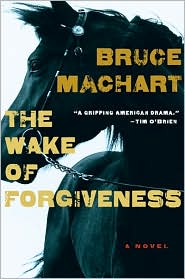
REVIEW: The Wake of Forgiveness by Bruce Machart


Synopsis

On a moonless Texas night in 1895, an ambitious young landowner suffers the loss of “the only woman he’s ever been fond of” when his wife dies during childbirth with the couple’s fourth boy, Karel. From an early age Karel proves so talented on horseback that his father enlists him to ride in acreage-staked horseraces against his neighbors. But Karel is forever haunted by thoughts of the mother he never knew, by the bloodshot blame in his father’s eyes, and permanently marked by the yoke he and his brothers are forced to wear to plow the family fields. Confident only in the saddle, Karel is certain that the horse “wants the whip the same way he wants his pop’s strap . . . the closest he ever gets to his father’s touch.” In the winter of 1910, Karel rides in the ultimate high-stakes race against a powerful Spanish patriarch and his alluring daughters. Hanging in the balance are his father’s fortune, his brother’s futures, and his own fate. Fourteen years later, with the stake of the race still driven hard between him and his brothers, Karel is finally forced to dress the wounds of his past and to salvage the tattered fabric of his family.

Reminiscent of Kent Haruf’s portrayals of hope amidst human heartbreak and Cormac McCarthy’s finely hewn evocations of the American Southwest, Bruce Machart’s striking debut is as well wrought as it is riveting. It compels us to consider the inescapable connections between sons and their mothers, between landscape and family, and between remembrance and redemption.


About the Author

BRUCE MACHART's fiction has appeared in Zoetrope: All-Story, Glimmer Train, Story, One-Story, and elsewhere, and has been anthologized in Best Stories of the American West. A graduate of the MFA program at Ohio State University, he currently lives and teaches in Houston.


My Thoughts

Hmmmm. I'm not even sure how I would summarize this story. So let's keep it brief:

Karel was raised by a hard man. Having lost his mother at birth, his life has been spent side-by-side with his older brothers, all of them carrying the yoke of their father (quite literally). As an adult, he is estranged from his brothers and free of his father, and riding on the "wake of forgiveness".

Karel's father Vaclav is hard and cruel, and yet I can't help but feel a certain sympathy for him. The softness of his wife was torn from him. At that moment, his soul was bared and exposed, and quickly scabbed over to become scarred and hard. Part of me feels for him, but his cruelty is hard to comprehend. Someone in our discussion reminded me of a passage from the book:
The townsfolk would assume, from this day forward, that Klara's death had turned a gentle man bitter and hard, but the truth, Vaclav knew, was that her absence only rendered him, again, the man he'd been before he'd met her, one only her proximity had ever softened.
So really Vaclav was a hard man to begin with, and only the softness of his wife made him gentle. Once she was gone, he returned to the man he'd once been.
The older boys had also admired their father-- his stubbornness and sharp tongue, the way he refused to beckon the help of other men-- and so had Karel, and it was this admiration that he couldn’t cotton to, the reverence for a man you surely hated, the hard plaque of respect that all the bad blood couldn’t scour from your heart. This, too, he and his brothers had shared, and the bile of a common indigestion that rose from the two brands of unsuited feelings had been easier to swallow when there were others around who were burning inside with the same struggle to choke it down.” (page 198)
But amidst all of this hardness, there are moments of softness and gooey goodness.
“I’ve seen them, Karel,” she says, and his name on her lips sets loose something warm and liquid beneath his skin, a rush of comfort that seeps into him and swirls around his bones. (p. 130)
Probably my favorite passage comes when his wife Sophie (sweet Sophie) addresses Karel's infidelity after the birth of their son...
Sophie worked a finger into the corner of the baby’s mouth to unlatch him, and then she turned him to the other breast, his tiny arms thrown up as if he’d found himself unmoored and falling from the night’s only comfort when she did. “What I want, Karel, is for you to think about him if you have to.”
“I have been,” Karel said, “I am.”
“That’s not what I’m saying. What I mean is, I want you to try thinking about him when thinking about me isn’t enough.” (page 299)
So what did I really "think" about this book? Well, it was tough for me at times. That isn't to say that it is a bad story, or that it was bad writing. Quite the contrary, I think that the writing was quite good. It simply wasn't "my type" of writing style. It didn't "flow" for me.  Just look at that quote that I posted above:
The townsfolk would assume, from this day forward, that Klara's death had turned a gentle man bitter and hard, but the truth, Vaclav knew, was that her absence only rendered him, again, the man he'd been before he'd met her, one only her proximity had ever softened.
 Do you see all of the commas in that thing? That's one sentence! And the majority of this book was narrative. I'm a dialogue-kinda gal. That's probably why I like Stephen King. I have seen author Machart compared to Cormac McCarthy, and I am not a fan of McCarthy. So it stands to reason that I may not be a huge fan of Machart.

So this was a "good" story. It didn't really grab me or excite me, but it was well-written. If you like stories of human heartache, filled with narrative and little dialogue, then definitely give this book a try.
  • Pub. Date: October 2010
  • Publisher: Houghton Mifflin Harcourt
  • Format: Hardcover, 320pp


My Rating: 7.5 out of 10


(My thanks to Barnes and Noble for allowing me a "First Look" at this book. Their generosity in no way affected my honest review.)

Sunday, February 7, 2010

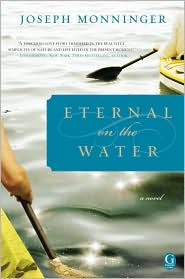
REVIEW: Eternal on the Water by Joseph Monninger

Synopsis

From the day Cobb and Mary meet kayaking on Maine's Allagash River and fall deeply in love, the two approach life with the same sense of adventure they use to conquer the river's treacherous rapids. But rivers do not let go so easily...and neither does their love. So when Mary's life takes the cruelest turn, she vows to face those rough waters on her own terms and asks Cobb to promise, when the time comes, to help her return to their beloved river for one final journey.

Set against the rugged wilderness of Maine, the exotic islands of Indonesia, the sweeping panoramas of Yellowstone National Park, and the tranquil villages of rural New England, Eternal on the Water is at once heartbreaking and uplifting — a timeless, beautifully rendered story of true love's power.


About the Author

(from www.josephmonninger.com)
Joseph Monninger has published eleven novels and three non-fiction books. His work has appeared in American Heritage, Scientific American, Readers Digest, Glamour, Playboy, Story, Fiction, The Boston Globe, Sports Illustrated and Ellery Queen, among other publications. He has twice received fellowships from the National Endowment for the Arts and has also received a fellowship from the New Hampshire Council for the Arts. His young adult novel, Baby, was awarded the 2008 award for best children’s literature from the Peace Corps Writers. It was also chosen as a top ten book by YALSA, the American Library Association. The Bulletin of the Center for Children’s’ Books awarded Hippie Chick, a young adult novel, a blue ribbon for a top book of 2008.
Joseph Monninger grew up in Westfield, New Jersey and attended Temple University on a football scholarship. He served as a Peace Corps volunteer in Upper Volta, now Burkina Faso, from 1975-77. He has been a licensed New Hampshire Fishing Guide and has fly-fished from New Zealand to Wyoming’s Wind River Range. He lives with his wife, Wendy, and his son, Justin, in a converted barn near New Hampshire’s Baker River. For several years his family competed in the New England Sled Dog sprint races and ran a small sled dog business in New Hampshire’s White Mountains. Laika and Willow, two sled dogs, live in happy retirement with them.
As a teacher at one time or another at the University of New Hampshire, the Lincoln School in Providence, Rhode Island, The American International School in Vienna, and at Plymouth State University, Joseph Monninger has spent thirty years in classrooms. During the summers he directed academic enrichment programs at Williams and Amherst Colleges. He led student groups on bicycle tours across Europe, sailed the Whitsunday Islands near the Great Barrier Reef, and worked on community service projects in Montserrat, West Indies and on the Crow Reservation in Montana. He has taken a mail boat across the southern edge of Newfoundland and, as a young man, hitch-hiked across the United States three times.
His latest novel, Eternal on the Water, will be published by Pocketbooks in February 2010.

My Thoughts


I received this book as part of the Barnes & Noble First Look club. After the last book through the club (The Postmistress) which I had some trouble getting through, I decided that I was going to be much more careful about which books I accepted as a First Look. So Eternal on the Water sounded like something I would probably enjoy, but had a little trepidation going into it.

That trepidation lasted about two pages, and then I was hooked.

Firstly let me warn you that this book actually begins before Chapter One. I grabbed this book one evening and flipped to Chapter One, started reading, and loved it. Then about halfway through the book I checked into the Barnes & Noble discussion on it, and I found that they were asking how the readers felt about knowing in the beginning of the book that Mary would die. Know? I had sort of figured out that it was gonna happen, but they made it sound as if it had played out in the beginning of the book. What was that all about? I flipped back to the very beginning of the book, and lo and behold! Before Chapter One even begins there was an unlabeled Preface that I had missed, and it did indeed begin with Mary's death. Well, that changed things a little! (So don't do like me and miss the preface!)

The book starts out with Cobb telling the story of the events leading up to Mary's death. He reminisces over the day they met and their life together.

They met when Cobb decided to kayak down the Allagash in an attempt to trace Thoreau's path. Their meeting seems fated from the beginning. They fall fast and hard into love, and their lives are lived fast and easy as they realize that there is a timeclock ticking. Mary is out to lead a full and complete life in an abbreviated amount of time, and she does it quite well. When it is time to leave, she does so with no regrets and a peaceful mind.

You get to know the wonderful support system of extensive friends and family of Cobb and Mary. The student that becomes something of a surrogate son to the childless couple. You feel their love for life and nature and adventure, and you are happy to be along with them on their ride.

I loved this story, tragic as it may be. I thought that the ending was beautiful, and the last 30 pages or so had me boo-hooing much of the time. The way that her family and friends supported her decision to leave this life when she had reached a point where the quality of life was lacking and she was becoming more of a "burden" to those she loved, and her proclamation that it was "time", was touching. There's a soft, ethereal cadence that softened the blow of the harsh realities of the story. I would strongly recommend this lovely tale of love and life and death.


My Rating: 9 out of 10

(Updated 8/5/10: This book has really stayed with me and haunted me since I finished it. Therefore I feel that it should really stand out above many of the other books I have read. So I am bumping up the rating from an 8.5 to a 9. Beautiful story with a haunting ending!)

Tuesday, November 10, 2009

REVIEW: The Postmistress by Sarah Blake

Synopsis

Those who carry the truth sometimes bear a terrible burden...

Filled with stunning parallels to today's world, The Postmistress is a sweeping novel about the loss of innocence of two extraordinary women-and of two countries torn apart by war.

On the eve of the United States's entrance into World War II in 1940, Iris James, the postmistress of Franklin, a small town on Cape Cod, does the unthinkable: She doesn't deliver a letter.

In London, American radio gal Frankie Bard is working with Edward R. Murrow, reporting on the Blitz. One night in a bomb shelter, she meets a doctor from Cape Cod with a letter in his pocket, a letter Frankie vows to deliver when she returns from Germany and France, where she is to record the stories of war refugees desperately trying to escape.

The residents of Franklin think the war can't touch them- but as Frankie's radio broadcasts air, some know that the war is indeed coming. And when Frankie arrives at their doorstep, the two stories collide in a way no one could have foreseen.

The Postmistress is an unforgettable tale of the secrets we must bear, or bury. It is about what happens to love during war-time, when those we cherish leave. And how every story-of love or war-is about looking left when we should have been looking right.


About the Author
Born in New York City, Sarah Blake has a BA from Yale University and a PhD in English and American Literature from New York University. She is the author of a chapbook of poems, Full Turn (Pennywhistle Press, 1989); an artist book, Runaway Girls \ (Hand Made Press, 1997) in collaboration with the artist, Robin Kahn; and two novels. Her first novel, Grange House, (Picador, 2000) was named a "New and Noteworthy" paperback in August, 2001 by The New York Times. Her second novel, The Postmistress, was by Amy Einhorn Books/Putnam in February 2010. Her essays and reviews have appeared in Good Housekeeping, US News and World Reports, The Chicago Tribune and elsewhere.
Sarah taught high school and college English for many years in Colorado and New York. She has taught fiction workshops at the Fine Arts Works Center in Provincetown, MA, The Writer's Center in Bethesda, MD, the University of Maryland, and George Washington University. She lives in Washington, DC.


My Thoughts
I had a really hard time getting into this book, and in the beginning I almost gave it up. But I told myself to give it 100 pages. If I didn't "feel it" by then, I would abandon it. The writing style in beginning of the book was so manic and clipped that I had a hard time following it. It didn't "flow" for me. I have to assume that this was intentional, displaying the mania of the war and the brevity of life. I felt no connection to the characters. I couldn't even keep the characters straight, and didn't know who was who.
But around chapter four things shifted, and became more enjoyable for me. I got a handle on who I was dealing with in the story, and the dialogue flowed.

The time is 1940, and on the other side of the world a war is engaged. When the book starts out, America is relatively unaffected by the war. We see the idyllic life of a young girl Emma, freshly married and moving to be with her new husband Will in a quiet northeastern coastal town. Will is the town doctor, and he and Emma are young, naive and in love, but Will has his own ghosts to deal with.

At the same time we are introduced to the Postmistress Iris. Actually we are introduced to Iris in the opening chapters of the book before anyone else in a very odd way, but I don't want to ruin it for anyone by disclosing how we are introduced to her.

But I will say that Iris seemed symbolic to me of the US at this time-- intact and untouched. Likewise Will and Emma sort of start out this way, young and in love and warm and cozy in their little cocoon. But then the cruelties of life begin to creep in and the cocoon begins to unravel.

We are also introduced to Frankie Bard- a reporter covering the story in Europe. Tough and somewhat "untouchable" in the beginning, she softens as the story goes on, becoming much more vulnerable.

It's funny. The first 50 pages were my least favorite of the book, and the last 50 were my most enjoyable.

This book was "okay". It just wasn't consistent for me. I'd like it, then it would drag, then I'd like it, and then it'd drag. I'd connect with moments, but for the most part I felt somewhat detached from the story. It just never really did "grab" me.

However the more things change, the more that they remain the same. There is an area of the book that mentions British and Russian forces invading Iran to protect the oil supply:
Worried by reports of German "tourists", Britain and Russia today decided that Iran must accept their protection of oil supplies. British land forces advanced in two areas to secure oil near Abadan and northeast of Baghdad to take similar sites around Kermashah.
This was in 1940. Sound familiar? Sound like something you'd hear on the nightly news today?

Not a bad story, but my least favorite so far of the three First Look books that I've read.

The Postmistress is available for sale on February 9, 2010.

My Rating: 7 out of 10

Tuesday, August 18, 2009

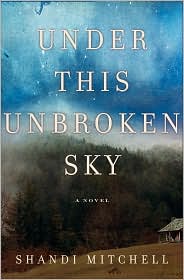
REVIEW: Under this Unbroken Sky by Shandi Mitchell

From a passionate new voice in the world of literary fiction comes the story of one family's struggle to survive-a tribute to the resiliency of the human spirit told with great sensitivity and cinematic aplomb.

Spring 1937. Ukrainian immigrant Theo Mykolayenko returns to his wife, Maria, and their five children after nearly a year spent in prison-two hundred and seventy five days and nights, each a scratch on his cell wall-for the crime of stealing grain. Scrapping to make ends meet during Theo's absence, the Mykolayenkos had been living under the care of Theo's sister, Anna, on the harsh and unforgiving Canadian prairies. Now, home at last, Theo has determined to make a better life for them all. Channeling the willpower that enabled him to survive drought, starvation, warfare, and Stalin's crimes in the Ukraine, he takes to the land with great resolve.

As the crops grow, so do the strength of his children and Theo's fierce pride. But family peace is quickly disrupted by the return of Anna's rogue husband, Stefan. Tensions between the two men heighten as Stefan increasingly treats Theo like a hired hand and demands a cut from the sales of the
crops. Soon, the family is splintered-with brother pitted against sister, son against mother, and in a disturbing twist, a new mother against her newborn.

Building to an unforgettable climax, this is the story of an immigrant family trying to find their way in a new world, where small and innocent acts have enormous and catastrophic consequences. It is a harrowing tale of fathers, mothers, husbands, wives, sisters, and brothers whose desperate hands till the earth, while equally desperate minds plot much darker deeds.Everything that the Mykolayenkos have hoped for, dreamed of, worked for beyond exhaustion is now at stake-their loved ones, and their lives. Rich in emotion and suspense, this sublimely crafted first novel hails the arrival of a superbly talented literary voice.


My Thoughts


Wow. This is a tough one. Not because I didn't like this book-- I loved this book-- but because it was so gut-wrenching at times that I question: Did I enjoy it?

But the verdict is "yes", for the most part, I did enjoy it. Even though there were moments in the book when I would sit with the book held in my hands, still closed, and take a deep breath and prepare myself to read on. Because I knew. I knew what was about to come was going to be hard to read. And I dreaded reading the words, even though I already knew what they would say.

This is the story of two families. Well, one family really. It is the story of a brother and sister, and their separate yet devastatingly entwined lives. It is about hardship and decisions-- the choices that we make in our lives. How those choices affect those around us.

Siblings Anna and Teodor fall on hard times in the Ukraine, and escape to Canada in the 1930s. Life there is harsh. Anna was once a jewel in a poverty-stricken family. She was unhappy with her position in life and dreamed of something more. Along came Stefan, a charming soldier who swept her off her feet. Anna marries Stefan, with hopes of escaping her life, and finds herself doomed with a cruel and heartless man.

Flash forward and we now find Anna a despondent and hopeless woman raising two children and abandoned by her worthless husband. She is living on land in brutal Canada, with her brother Teodor's wife and children living in a shack out back since Teodor was sent to prison a year before for the single crime of withholding some of his grain for himself and his starving family.

Teodor now returns, and the rollercoaster of ups and downs begin. You get to see the polarization of two different families. Anna's family is a shambles, living life with no direction, depending on Teodor for their survival. Teodor's family, on the other hand, works like a well-oiled machine. Hard-working and enduring, nothing stops them. They face life head-on, while Anna's family lies defeated.

I loved the writing style of this book. I loved the characters, which I really got to know through all of the little details that the author Shandi Mitchell includes. You really get to know these people, and like or dislike them. That is why it was so hard for me to read on when I knew that something terrible was about to happen-- I knew these people; I liked these people. I didn't want to see anything more happen to them. I wanted to shake Anna and tell her to wake up from her self-pitying stupor and take care of her family! I wanted to befriend Maria and be awed by her strength and selflessness. I wanted to take pride in Maria and Teodor's children. I wanted to save Anna's children.

This is a beautifully-written, heart-wrenching story that I highly recommend. I'm left feeling as if my sister and her family has moved away, and I miss them.

If you get the chance to read this one, grab it! In fact, I will be giving away my ARC in the upcoming weeks, so keep your eyes open!
  • Publisher: HarperCollins Publishers
  • Pub. Date: September 08, 2009
  • ISBN-13: 9780061774027
  • 352pp
My Rating: 9.5 out of 10

Thursday, June 25, 2009

REVIEW: Of Bees and Mist by Erick Setiawan

Synopsis: Reminiscent of Keith Donohue's The Stolen Child, Erick Setiawan's richly atmospheric debut is a beautiful, engrossing fable of three generations of women in two families; their destructive jealousies, their loves and losses, their sacrifices and deeply rooted deceptions, and their triumphs.

Of Bees and Mist is the tale of Meridia -- raised in a sepulchral house where ghosts dwell in mirrors, she spends her childhood feeling neglected and invisible. Every evening her father vanishes inside a blue mist without so much as an explanation, and her mother spends her days venomously beheading cauliflowers in the kitchen. At sixteen, desperate to escape, Meridia marries a tenderhearted young man and moves into his seemingly warm and charming family home. Little does she suspect that his parents are harboring secrets of their own. There is a grave hidden in the garden. There are two sisters groomed from birth to despise each other. And there is Eva, the formidable matriarch whose grievances swarm the air like an army of bees. In this haunting story, Setiawan takes Meridia on a tumultuous ride of hope and heartbreak as she struggles to keep her young family together and discovers long-kept secrets about her own past as well as the shocking truths about her husband's family.

Readers of magic-realist fiction will instantly be captivated by this richly evocative fairy tale. Of Bees and Mist takes place in a nameless town during a timeless era, where spirits and spells, witchcraft and demons, ghosts and clairvoyance -- both real and imagined -- are an everyday reality. Setiawan skillfully blends the real and the fantastical as he follows our heroine over a 30-year time span in which her love, courage, and sanity are tested to the limit.


Scheduled for release August 4, 2009


Of Bees and Mist opened up a world previously unknown to me. A world where women can grow herbs out of their arms and chest, mist haunts the front door, and men can swallow vegetables whole and spit them out chopped, seasoned and pickled.

There was something almost fantastical about the writing style. For some reason, as I read the book, which flowed with a surrealism and slight goth-like feel, I was reminded of children's stories like Charlie and the Chocolate Factory (atleast the happy Gene Wilder movie version) and Neverending Story.

You know how I can tell that I really like a book? I find myself taking notes while I read, wanting to make sure that I quote a favorite passage and get down my feelings at a particular moment. Much of my review on a "great book" is written during the reading of the book, so everything is fresh. I did that a LOT with this book. Just a couple of my favorite passages found early on in the book:

pg 2: "Ravenna went on for some minutes, rocking her daughter gently, and by the time she recited the intimate details surrounding the baby's conception-- "if you could only see the ungodly contortions your father had me do"-- Meridia spluttered a cough and inhaled her first breath.

"'Stubborn little creature,' chuckled Ravenna. "Do you think you're too good for this world?'"


pg 5: "As she chopped, grilled, and boiled, Ravenna addressed the vegetables in a dark and private language, telling them of sorrow and despair."

I guess this book wasn't really anything like I expected, and quite honestly if you were to give me details about it ahead of time I probably never would have read it. I wouldn't have expected to find a book written with such fantastical flavor, and which at times can be somewhat dark and heavy, so charming. Really a lovely and impressive debut by Mr. Setiawan. I look forward to seeing what rabbit he has hiding up his sleeve next.

I jumped right into this book without really even taking in the cover art. Someone in the book discussion pointed out all of the hidden pictures to be found in the cover art-- pictures that are like little windows into Meridia's life.

This book follows the often sad and bewildering life of Meridia, swallowed up in a world reminiscent of a Harry Potter book. You really feel for Meridia, and just want to take her in your arms and shelter her. You keep waiting for someone to do this. "Where is her protector?", you keep wondering in frustration. "Where is her shelter from the world? Her lee from the wind? Will no one be her champion?"

I've said in the past that I'm not a "book club" kind of gal-- that I don't want to sit around and discuss books and symbolism. I just want to read a good story. I have to say that this book has shown that not to be entirely true. This book is FULL of symbolism, and I found that I LOVED it. Additionally it was a wonderfully good story and kept me totally absorbed.

A remarkable debut novel, and highly recommended. Love it, love it, love it!

Of Bees and Mist vocabulary


Here are two new-to-me words I learned while reading this book:

naphthalene-- It is best known as the traditional, primary ingredient of mothballs. Usage in the book: The scent of lilac that had previously perfumed her was now replaced by something akin to naphthalene.

excoriating-- (1) To denounce or berate severely; flay verbally. (2) To strip off or remove the skin from. Usage in the book: Yet when profits plummeted, Eva's look became no less excoriating than her words.

Product Details

* Hardcover: 416 pages
* Publisher: Simon & Schuster (August 4, 2009)
* Language: English
* ISBN-10: 1416596240
* ISBN-13: 978-1416596240

My Rating: 9 out of 10