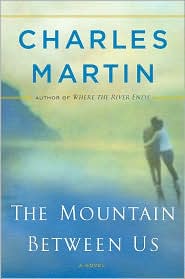
From the author of Where the River Ends, comes this page-turning story of love and survival.
On a stormy winter night, two strangers wait for a flight at the Salt Lake City airport. Ashley Knox is an attractive, successful writer, who is flying East for her much anticipated wedding. Dr. Ben Payne has just wrapped up a medical conference and is also eager to get back East for a slate of surgeries he has scheduled for the following day. When the last outgoing flight is cancelled due to a broken de-icer and a forthcoming storm, Ben finds a charter plane that can take him around the storm and drop him in Denver to catch a connection. And when the pilot says the single engine prop plane can fit one more, if barely, Ben offers the seat to Ashley knowing that she needs to get back just as urgently. And then the unthinkable happens. The pilot has a heart attack mid-flight and the plane crashes into the High Uintas Wilderness— one of the largest stretches of harsh and remote land in the United States.
Ben, who has broken ribs and Ashley, who suffers a terrible leg fracture, along with the pilot's dog, are faced with an incredibly harrowing battle to survive. Fortunately, Ben is a medical professional and avid climber (and in a lucky break, has his gear from a climb earlier in the week). With little hope for rescue, he must nurse Ashley back to health and figure out how they are going to get off the mountain, where the temperature hovers in the teens. Meanwhile, Ashley soon realizes that the very private Ben has some serious emotional wounds to heal as well. He explains to Ashley that he is separated from his beloved wife, but in a long standing tradition, he faithfully records messages for her on his voice recorder reflecting on their love affair. As Ashley eavesdrops on Ben's tender words to his estranged wife she comes to fear that when it comes to her own love story, she's just settling. And what's more: she begins to realize that the man she is really attracted to, the man she may love, is Ben.
As the days on the mountains become weeks, their survival become increasingly perilous. How will they make it out of the wilderness and if they do, how will this experience change them forever?
Both a tender and page-turning read, The Mountain Between Us will reaffirm your belief in the power of love to sustain us.
I used to put a long list of all my great and varied accomplishments right here in this space (In truth, it was rather short.) hoping it made me look important. Now that I’m forty, I’m not sure I see the value. Yes, I have a few degrees and I worked hard to get here, but saying all that reminds me of the story of the guy who walked barefoot, backwards, through the snow, uphill both ways, carrying his horse…to school. (I’m scratching my head.)
Here’s some of the stuff that matters.
Christy and I married in 1993. If you include dating, I’ve known and loved her for more than half my life. She is and always will be the home for my heart. We have three boys. Charlie, John T. and Rives. They range from 12 to 7. Folks often ask me, which of my books do I like the best. You might as well line up my sons and ask me who I love the most.
My hobbies are bow hunting, working out (a blend of old school stuff and martial arts, called Fight Fit) and Tae Kwon Do. Currently, I’m a blue belt and I’m the least flexible person you’ve ever met. The guy that trains me, laughs everytime I start warming up. My boys are far better at Tae Kwon Do than I but I doubt they have as much fun – I get to do and watch. They just do.
I'm not sure what time it is. This thing should record that. I woke a few minutes ago. It's still dark. I don't know how long I was out.
Town/Location/Environment:
Different parts of the story take place in different areas, but the majority takes place in the Uinta Mountains in Utah and Colorado. High mountains, deep snow, frozen creeks and lakes, tall trees. Mountain lions, moose, wolves. Rugged and pristine, it's flanked by parks numbering in the millions of acres.
I'm gonna keep this one short and sweet. Dr. Ben Payne is trying to get home after a conference and meets Ashley. They chat, and get to know one another a little. Ashley is trying to get home for her wedding, when they both find their flights are canceled. Ben gets the both of them a spot on a charter flight, which then crashes in the Uintas, killing the pilot and injuring the both of them. What ensues is a struggle for survival and a love story involving Ben and his wife, and Ashley and her fiance.
This book wound up not being what I had expected. I was expecting more of a survival story and more romance, and instead wound up having more reflection, angst and turmoil.
Both of the primary characters, Ben and Ashley, are likable. There is something pure about Ben, like he's better than most people. Special. Ashley is strong-minded and her humor carries them through some tough times.
The ending of the book was a surprise, and I found myself boo-hooing through the last 30 pages or so.
This was a good attempt. It wasn't a brilliant piece of literature and didn't bring me to my knees with emotion or thrilling moments, but it was solid and well worth the read.
I recently posted Stephen King's Summer Reading List, which was posted in Entertainment magazine. Now I have for you the summer reading list of Tom Hanks. I know. Summer is half over, but I'm just getting around to reading my magazine from a few months ago. I initially bought it for the summer movie list!
So here are the books that Tom Hanks lists as being on his summer radar...
Bossypants by Tina Fey
Before Liz Lemon, before "Weekend Update," before "Sarah Palin," Tina Fey was just a young girl with a dream: a recurring stress dream that she was being chased through a local airport by her middle-school gym teacher. She also had a dream that one day she would be a comedian on TV.
She has seen both these dreams come true.
At last, Tina Fey's story can be told. From her youthful days as a vicious nerd to her tour of duty on Saturday Night Live; from her passionately halfhearted pursuit of physical beauty to her life as a mother eating things off the floor; from her one-sided college romance to her nearly fatal honeymoon — from the beginning of this paragraph to this final sentence.
Tina Fey reveals all, and proves what we've all suspected: you're no one until someone calls you bossy.
The Gunslinger (Dark Tower #1) by Stephen King
In The Gunslinger (originally published in 1982), King introduces his most enigmatic hero, Roland Deschain of Gilead, the Last Gunslinger. He is a haunting, solitary figure at first, on a mysterious quest through a desolate world that eerily mirrors our own. Pursuing the man in black, an evil being who can bring the dead back to life, Roland is a good man who seems to leave nothing but death in his wake.
Achilles in Vietnam: Combat Trauma and the Undoing of Character by Jonathan Shay In this strikingly original and groundbreaking book, Dr. Shay examines the psychological devastation of war by comparing the soldiers of Homer's Iliad with Vietnam veterans suffering from post-traumatic stress disorder. Although the Iliad was written twenty-seven centuries ago it has much to teach about combat trauma, as do the more recent, compelling voices and experiences of Vietnam vets.
The Cairo Trilogy by Naguib Mahfouz
Naguib Mahfouz's magnificent epic trilogy of colonial Egypt appears here in one volume for the first time. The Nobel Prize-winning writer's masterwork is the engrossing story of a Muslim family in Cairo during Britain's occupation of Egypt in the early decades of the twentieth century.
The novels of The Cairo Trilogy trace three generations of the family of tyrannical patriarch Al-Sayyid Ahmad Abd al-Jawad, who rules his household with a strict hand while living a secret life of self-indulgence. Palace Walk introduces us to his gentle, oppressed wife, Amina, his cloistered daughters, Aisha and Khadija, and his three sons–the tragic and idealistic Fahmy, the dissolute hedonist Yasin, and the soul-searching intellectual Kamal. Al-Sayyid Ahmad's rebellious children struggle to move beyond his domination in Palace of Desire, as the world around them opens to the currents of modernity and political and domestic turmoil brought by the 1920s. Sugar Street brings Mahfouz's vivid tapestry of an evolving Egypt to a dramatic climax as the aging patriarch sees one grandson become a Communist, one a Muslim fundamentalist, and one the lover of a powerful politician.
Throughout the trilogy, the family's trials mirror those of their turbulent country during the years spanning the two World Wars, as change comes to a society that has resisted it for centuries. Filled with compelling drama, earthy humor, and remarkable insight, The Cairo Trilogy is the achievement of a master storyteller.
Five Flights Up by Toni Schlesinger
We know where we live, but do we know how we live? For eight years, Village Voice columnist Ton Schlesinger poked through New York's urban wilderness, ferreting out behind-closed-door stories of city people who have carved out niches in the vertical jungle. Sociology, ethnography, history, and architecture -- all rolled in one.
Bossypants sounds funny! I have the Dark Tower series on my TBR list. The others sound interesting as well. What about you? Have you read any of them? Anything catch your eye?
NOTE: A reminder that you are free to email me about any giveaways that you are having, if you want me to blog them, and I'll be happy to try to post them even if I am not entering them. Just include a link to the giveaway, what you are giving away, how many copies are being given away, and the deadline in order to assure being included. Email me at nfmgirl AT gmail DOT com.
Here is a list of some giveaways going on in Blogworld*. Please note that new giveaways that were added this week are indented in Blockquotes:
Read Me Bookmark Me Love Me is giving having two giveaways. Both giveaways are for your choice of book from eight. The first giveaway offers your choice out of eight May-July releases, and the other is for your choice out of August-October releases. Deadline is August 15. International!
In the Hammock is giving away 3 copies of Confessions of an Improper Bride. Deadline is August 18. US/Canada only.
Laura's Reviews is giving away a copy of Remember Me. Deadline is August 19. US/Canada only.
Babbling Flow is giving away your choice out of four ARCs. Deadline is August 19. International!
Peeking Between the Pages is giving away Yankee Doodle Dixie. Deadline is August 20. US/Canada only.
In the Hammock is giving away The Twelfth Enchantment. Deadline is August 22. US/Canada only.
Amused by Books is giving away Before Ever After. Deadline is August 23. US/Canada only.
Savvy Verse & Wit is giving away Becoming Marie Antoinette. Deadline is August 24. US only.
Peeking Between the Pages is giving away How to Be an American Housewife. Deadline is August 27. US only.
Peeking Between the Pages is giving away Let's Take the Long Way Home. Deadline is August 27. US/Canada only.
Laura's Reviews is giving away Becoming Marie Antoinette. Deadline is September 2. US/Canada only.
Peeking Between the Pages is giving away a copy of Becoming Marie Antoinette. Deadline is September 11. US/Canada only.
*Courtesy Note: Please keep in mind the many, many hours of work that goes into me compiling this list each week. Please be courteous and thoughtful, and do not steal my text. Either recreate your own list, or link to this list and direct your readers here for giveaway information. Thank you so much for your consideration.
Mailbox Monday is now hosted monthly by a different blog. Here is the official blog of Mailbox Monday.Here is what I received over the last number of weeks:
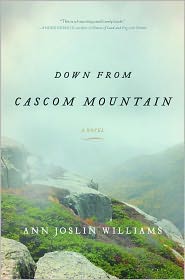
Ann Joslin Williams grew up observing the craft of writing: her father, Thomas Williams, was a National Book Award-winning novelist. Many of his stories were set in the fictional town of Leah, New Hampshire, and on nearby Cascom Mountain, locations that closely mirrored the landscape of the Williamses' real hometown. With Down from Cascom Mountain, Ann Joslin Williams proves herself a formidably talented novelist in her own right, while paying tribute to her father by setting her debut novel in the same fictional world-the New Hampshire he imagined and that she has always known.
In Down from Cascom Mountain, newlywed Mary Hall brings her husband to settle in the rural New Hampshire of her youth to fix up the house she grew up in and to reconnect to the land that defined her, with all its beauty and danger. But on a mountain day hike, she watches helplessly as her husband falls to his death. As she struggles with her sudden grief, in the days and months that follow, Mary finds new friendships-with Callie and Tobin, teenagers on the mountain club's crew, and with Ben, the gentle fire watchman. All are haunted by their own losses, but they find ways to restore hope in one another, holding firmly as they navigate the rugged terrain of the unknown and unknowable, and loves lost and found.
The United States is near total collapse. But 87% of the population doesn't care: they're addicted to flashback, a drug that allows its users to re-experience the best moments of their lives. After ex-detective Nick Bottom's wife died in a car accident, he went under the flash to be with her; he's lost his job, his teenage son, and his livelihood as a result.
Nick may be a lost soul but he's still a good cop, so he is hired to investigate the murder of a top governmental advisor's son. This flashback-addict becomes the one man who may be able to change the course of an entire nation turning away from the future to live in the past.
A provocative novel set in a future that seems scarily possible, FLASHBACK proves why Dan Simmons is one of our most exciting and versatile writers.
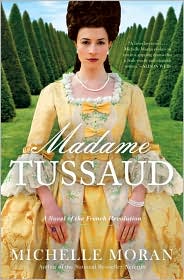
The world knows Madame Tussaud as a wax artist extraordinaire . . . but who was this woman who became one of the most famous sculptresses of all time? In these pages, her tumultuous and amazing story comes to life as only Michelle Moran can tell it. The year is 1788, and a revolution is about to begin.
Smart and ambitious, Marie Tussaud has learned the secrets of wax sculpting by working alongside her uncle in their celebrated wax museum, the Salon de Cire. From her popular model of the American ambassador, Thomas Jefferson, to her tableau of the royal family at dinner, Marie’s museum provides Parisians with the very latest news on fashion, gossip, and even politics. Her customers hail from every walk of life, yet her greatest dream is to attract the attention of Marie Antoinette and Louis XVI; their stamp of approval on her work could catapult her and her museum to the fame and riches she desires. After months of anticipation, Marie learns that the royal family is willing to come and see their likenesses. When they finally arrive, the king’s sister is so impressed that she requests Marie’s presence at Versailles as a royal tutor in wax sculpting. It is a request Marie knows she cannot refuse—even if it means time away from her beloved Salon and her increasingly dear friend, Henri Charles.
As Marie gets to know her pupil, Princesse Élisabeth, she also becomes acquainted with the king and queen, who introduce her to the glamorous life at court. From lavish parties with more delicacies than she’s ever seen to rooms filled with candles lit only once before being discarded, Marie steps into a world entirely different from her home on the Boulevard du Temple, where people are selling their teeth in order to put food on the table.
Meanwhile, many resent the vast separation between rich and poor. In salons and cafés across Paris, people like Camille Desmoulins, Jean-Paul Marat, and Maximilien Robespierre are lashing out against the monarchy. Soon, there’s whispered talk of revolution. . . . Will Marie be able to hold on to both the love of her life and her friendship with the royal family as France approaches civil war? And more important, will she be able to fulfill the demands of powerful revolutionaries who ask that she make the death masks of beheaded aristocrats, some of whom she knows?
Spanning five years, from the budding revolution to the Reign of Terror, Madame Tussaud brings us into the world of an incredible heroine whose talent for wax modeling saved her life and preserved the faces of a vanished kingdom.
Michelle Moran was born in the San Fernando Valley, CA. She took an interest in writing from an early age, purchasing Writer's Market and submitting her stories and novellas to publishers from the time she was twelve. When she was accepted into Pomona College she took as many classes as possible in British Literature, particularly Milton, Chaucer, and the Bard. Not surprisingly, she majored in English while she was there. Following a summer in Israel where she worked as a volunteer archaeologist, she earned an MA from the Claremont Graduate University.
Michelle has traveled around the world, from Zimbabwe to India, and her experiences at archaeological sites were what inspired her to write historical fiction. A public high school teacher for six years, Michelle Moran is currently a full-time writer living in California with her husband.
A: My interest in Marie Tussaud began on my very first trip to London. Like thousands of tourists before me, I had decided that I wanted to visit the famous wax museum, Madame Tussauds. At the time, I knew almost nothing about the woman behind the name, but as I passed through the exhibition, I began to piece together what would ultimately prove to be a fascinating story. In the first wax tableau I came across, Marie Tussaud had modeled Queen Marie Antoinette with her husband and children. They looked young and happy, dressed in lavish court gowns and silk culottes. In another tableau, the mistress of King Louis XV lay sprawled on a couch, her blonde hair tumbling down her shoulders. Clearly, Marie Tussaud had been interested in modeling the celebrities of her day. Some she would have sculpted from memory, while many she would have met and modeled in person. Marie’s art had obviously gained her access to some of the highest circles in French society.
But in a third tableau, a different part of Marie Tussaud’s life emerged. Dressed in a black gown and dirtied apron, a young Marie could be seen holding up a lantern in the Madeleine Cemetery. The Revolution had begun, and she was searching through a pile of severed heads – all victims of Madame Guillotine. Immediately, I wanted to know what was she doing in that cemetery. Whose heads were they, and did she know those people? When I learned what Marie Tussaud went through during the French Revolution – who she’d met, where she’d gone, and what she’d seen – I knew I would someday tell her story.
Q: Why does history tend to remember the French Revolution as being successful?
A: Probably because it did exactly what its leaders intended, which was to deal a devastating blow to the aristocracy. But very soon after the overthrow of the monarchy, France’s new government became obsessed with idea of rooting out Royalists. A fever like that of the Salem Witch Trials gripped France, and neighbor began turning on neighbor, accusing each other of being royalists. And it didn’t take much to be sentenced to the guillotine. By 1793, all a person had to do was whistle the wrong tune or disrespect a liberty tree (saplings planted in the name of “liberty”) to be accused of endangering the nation. By the end of the French Revolution, more than five hundred thousand French citizens had been killed, most of them commoners.
Q: How did you go about researching Madame Tussaud?
A: I began with a trip to France, where nearly all of the novel takes place. Once there, I tried to visit the locations Madame Tussaud herself would have seen. Some—such as the Bastille—no longer exist, but there are others—Versailles being the sublime example—where a great deal of 18th century life has been preserved. After my trip, I did as much research as I could in libraries. Finally, anything I couldn’t find in books I tried to discover through email conversations with some very generous French historians.
Q: What is the most interesting fact you learned while researching MadameTussaud?
A: That in 18th century France, most people went to street dentists when they had a toothache. These dentists would sit at a table laid out with various tools, and their unfortunate patients would have their teeth extracted right there, in the dirty street. After the extraction, the patient could sell his tooth (or teeth, if he was unlucky) to the dentist, who would then sell it to people like Marie Tussaud for her wax models. I know… creepy and disturbing!
Q: In your research about Marie Antoinette, did you come away feeling sorry for Queen Marie Antoinette? A: Yes. I think the queen was as much a victim of circumstance as she was her own naiveté. While it’s true that she held lavish balls in Versailles and spent a fortune on gowns, this really wasn’t anything new for the monarchy. The difference was that it was Marie Antoinette, and not the king, who was doing the spending. The resentment and jealousy which built up around the queen having access to her husband’s money earned her some powerful enemies at court. Meanwhile, the commoners were growing resentful as well. Yet the entire royal family’s expenditures were actually a small fraction of the nation’s budget, and whenever Marie Antoinette tried to economize, the courtiers who counted on her favors would raise a hue and cry. Various nobles had grown accustomed to the extra money they could earn from selling the dresses she had already worn or the accessories which had been ordered for her (often far more than she actually needed or used). These privileges were jealously guarded in Versailles, and this meant that the queen was “damned if she did, and damned if she didn’t.”
Q: Why are we still interested in Madame Tussaud 250 years after her birth?
A: I think the fascination with Madame Tussaud comes from the fact that the life she created was as intricate and mystifying as her artistry itself. Here was a woman who was asked to tutor the king’s sister, yet she managed to keep her head during the Reign of Terror when women were being imprisoned for nothing more than wearing the wrong color. She navigated two very different worlds – the court of Versailles and the streets of Paris - and against all odds, lived to tell the tale. And through it all, it was her artistry that saved her. Today, with digital cameras available to capture everything around us, you would think it would be difficult to become enthusiastic about seeing a person’s likeness reproduced in wax. But there is something compelling about waxworks, particularly those done at the various Madame Tussauds around the world. Perhaps it’s the thrill of pretending to photograph yourself next to a celebrity, or getting to pose with Henry VIII “in the flesh,” that keep customers coming back. Or maybe it’s the eerie and arresting vision of a lifeless object that so closely mimics someone’s humanity that people relate to. Whatever it is, I think Madame Tussauds will be a major draw even in another two hundred and fifty years.
Q: If Madame Tussaud were alive today, would she be happy to see that her wax museums have expanded not only throughout Europe, but now the world? A: I think Marie Tussaud would be ecstatic. Having grown up on the Boulevard du Temple surrounded by actresses and showmen, Marie was taught from a very young age that publicity was the difference between staying in business and having to sell your teeth in order to buy bread. Today, the Madame Tussauds wax museums do a wonderful job of finding new subjects to model, and the public unveilings of their new wax figures would have absolutely delighted Marie. A part of me wants to say, “If only Marie could see her museum now,” but something tells me she wouldn’t be surprised at all by how popular her exhibition has become.
My Thoughts
When she walks through the door of my exhibition, everything disappears: the sound of the rain against the windows, the wax models, the customers, even the children.
Town/Location/Environment:
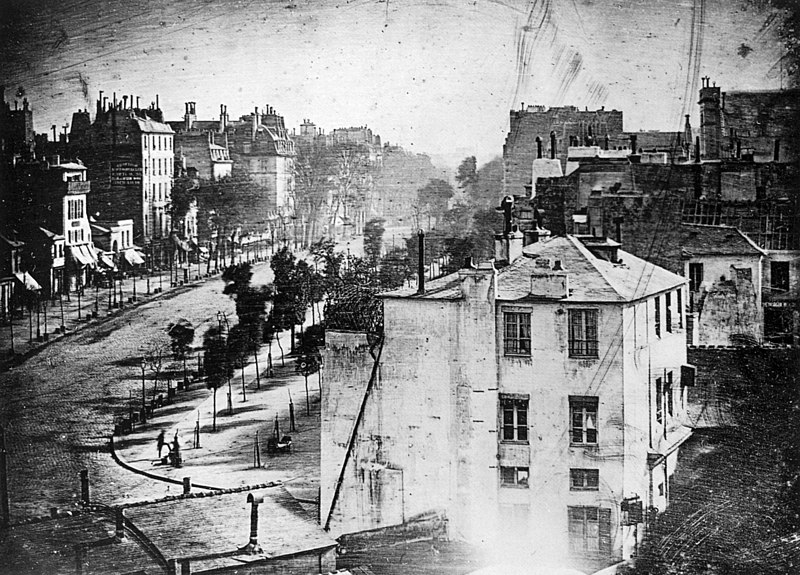
The majority of the book takes place in Paris, and much of it occurs on the Boulevard du Temple, where Madame Tussaud (then known as Marie Grosholtz) lived and worked at her first wax museum with her family. I thought that this photo, which author Michelle Moran introduced to her readers to at the end of her book, was a suitable photo to represent the times. The photo was taken by Daguerre in 1838 of the Boulevard du Temple (a few decades after Marie had moved away), and is purported to be the first photo of a human being. As described in Wikipedia:
The purportedly first picture of a living person. The image shows a busy street, but due to exposure time of more than ten minutes, the traffic was moving too much to appear. The exception is the man at the bottom left, who stood still getting his boots polished long enough to show. Look closely and you will also see another man sitting on a bench to the right reading a newspaper. Also in the upper left hand side you can also see another man standing under the awning of the 3rd building from the left. What looks to be a woman standing under the street lantern at 10 o'clock from the man getting his shoes shined and another one in the big white building, 1st row 3rd window down.
This is where it all began for Madam Tussaud's, and where much of her story takes place.
This story covers the life of Madame Tussaud through the turbulent years of the French Revolution. We find Madame Tussaud living on the Boulevard du Temple with her mother and "uncle" Curtius (he is really her mother's lover, and like a father to Marie, but as her mother is not capable of legally marrying Curtius, they live together without the benefit of marriage).
Curtius is a respected wax sculptor and has taught Marie everything she knows about the craft and business, and they have grabbed the attention of the king and queen, who visit the "salon" (as they call the wax museum) , bringing great excitement to the area and lots of attention and business to the salon in the days following the royal's visit.
Marie's three brothers are all members of the Swiss Guard, and sworn to protect the king. Due to line of work that Marie and Curtius are in, the family has varied associations and their home is often host to gatherings of key political figures like Robespierre, Lafayette, Duc d'Orleans (cousin of King Louis XVI), and Marat.
Madame Tussaud lives next door to Henri and Jacques Charles, brothers who are scientists and use their home to perform experiments. Henri and Jacques are good friends of the family, but Henri eventually makes it clear to Marie that he is in love with her. His courtship of her and his patience with her while she delays their romance is sweet and touching.
The story takes you through the French Revolution, from the grumblings of discontent to the violent clashes and the following "inquisition" reminiscent of the Salem witch trials. Friends turn on friends, neighbors on neighbors. Robespierre releases lists of "enemies" of the revolution, most of which initially are royals. People who make it on the list are targeted for arrest and often execution by guillotine, or are attacked and executed by mobs of supporters of the revolution. Later on, those that make it on the "list" are most often commoners, and in fact during the "Reign of Terror" (as it was called), the commoners suffered worse than anyone.
I found it really bizarre, and was totally surprised to learn, that the revolutionaries even adopted new calendars, new methods for counting years, new fashions and holidays, and even banned religion altogether, and began imprisoning people for something as minor as failing to wear a cockade to identify them as a "Citizen" (people who supported the revolution). This was liberty? As Michelle states in her "Historical Note" at the end of the book:
In their fanaticism to spread liberty and equality, the revolutionaries created a tyranny.
My own family are Huguenots, so I've been raised with stories of how my ancestors endured religious persecution in France. However I had no idea what occurred during the French Revolution, and was totally taken aback.
I do not seek out the historical fiction genre. I often find it a little bland for my tastes. However, this being my second Michelle Moran historical fiction book, I have found the author does such a great job of bringing characters to life and recreating the times and events surrounding their lives. Each time I finish one of her books, I'm left hungering for another!
My final thoughts: Engaging characters, disturbing images, shocking events. Love, family, loss. This book has it all. If you love historical fiction (and, heck, even if you don't!), pick this one up right away!
My Rating: 8.5 out of 10
Disclosure:
I received a copy of this book to review from the author, in exchange for my honest opinion. I was not financially compensated in any way, and the opinions expressed are my own and based on my observations while reading this novel. Thanks so much to Michelle Moran for surprising me with this book!
Blogging since 2009, I'm a south Florida girl living in the home of mudding and hog hunting. Just trying to survive amid too many books and vastly outnumbered by a ZooCrew, hoping not to wind up a trophy head mounted on someone's wall in the process. Lover of lists, an eternal procrastinator, and really just a flower child at heart.



 flight, which then crashes in the Uintas, killing the pilot and injuring the both of them. What ensues is a struggle for survival and a love story involving Ben and his wife, and Ashley and her fiance.









 Posts
Posts