When thirty-year-old
English teacher Anna Emerson is offered a job tutoring T.J. Callahan at
his family's summer rental in the Maldives, she accepts without
hesitation; a working vacation on a tropical island trumps the library
any day.
T.J. Callahan has no desire to leave town, not that
anyone asked him. He's almost seventeen and if having cancer wasn't bad
enough, now he has to spend his first summer in remission with his
family - and a stack of overdue assignments - instead of his friends.
Anna
and T.J. are en route to join T.J.'s family in the Maldives when the
pilot of their seaplane suffers a fatal heart attack and crash-lands in
the Indian Ocean. Adrift in shark-infested waters, their life jackets
keep them afloat until they make it to the shore of an uninhabited
island. Now Anna and T.J. just want to survive and they must work
together to obtain water, food, fire, and shelter. Their basic needs
might be met but as the days turn to weeks, and then months, the
castaways encounter plenty of other obstacles, including violent
tropical storms, the many dangers lurking in the sea, and the
possibility that T.J.'s cancer could return. As T.J. celebrates yet
another birthday on the island, Anna begins to wonder if the biggest
challenge of all might be living with a boy who is gradually becoming a
man.
About the Author from Goodreads
Tracey Garvis-Graves is the
author of On the Island and Covet. She lives in a suburb of Des Moines,
Iowa with her husband, two children, and hyper dog Chloe. She blogs at www.traceygarvisgraves.com
using colorful language and a snarky sense of humor to write about pop
culture, silly television shows, and her suburban neighborhood. You can
e-mail her at traceygarvisgraves@yahoo.com. She’d love to hear from you.
My Thoughts
Anna accepts a job as a tutor for 17-year-old TJ, who battled cancer and is in remission. On the way to the Maldives, their plane goes down somewhere in the ocean and they wash up on a deserted island. As they struggle to survive, they grow together and fall in love. This book had its moments. Sometimes interesting, sometimes predictable, often contrived, it was at least able to hold my attention. There were some pretty ridiculous aspects. For example, Anna packed enough soap and shampoo to last the summer when flying to Maldives, and yet 2 1/2 years after being stranded on the island, they still had shampoo and soap for bathing. The writing was a bit simple-- it wasn't descriptive, it wasn't beautifully lyrical. In fact, it reminded me of my own writing when I attempt to write fiction, and I always feel that my writing falls so short. There wasn't much of an attempt to really bring you into the story and make you feel like you were there. It was just "he said this, and she said this, and the wind blew and it was hot, and they were hungry and sad and lonely". It was very straight-forward and simple writing. And I just didn't get some things. For instance, after they fell in love, Anna kept worrying about what would happen if they got off the island? What would people say? She believed there would be repercussions for "her actions", even thought TJ was an adult. I just didn't get why she was so stressed over this. Their relationship was unorthodox, but it wasn't as if she were a pedophile taking advantage of a 12-year-old. And surely people would understand that they had been stranded on an island together, never knowing whether one or both of them may die.
I think I actually enjoyed the last half of this book, as it seemed more believable, if not the more exciting half. And this was a bit of a disappointment, as it was the first half that I was really looking forward to experiencing.
Considering the author chose to self-publish this novel, you've gotta give her credit. She has had the best success I've seen thus far from a self-published author! Her book has been well received and is showing up on actual bookstore shelves and has become a bestseller. That's impressive!
My final word: This was an "okay" book. I was left with the same feeling I usually have after reading most romance novels. As if it were a bit of fluff and little substance, although the last half of the book is more substantial. Read this one when you are looking for a little fluff. Buy Now: Barnes and Noble Amazon
My Rating:
Disclosure:
I received a copy of this book to review Netgalley in exchange for my honest opinion. I was not financially compensated in
any way, and the opinions expressed are my own and based on my
observations while reading this novel.
The women of Freesia
Court are convinced that there is nothing good coffee, delectable
desserts, and a strong shoulder can’t fix. Laughter is the glue that
holds them together—the foundation of a book group they call AHEB (Angry
Housewives Eating Bon Bons), an unofficial “club” that becomes much
more. It becomes a lifeline. Holding on through forty eventful years,
there’s Faith, a lonely mother of twins who harbors a terrible secret
that has condemned her to living a lie; big, beautiful Audrey, the
resident sex queen who knows that with good posture and an attitude you
can get away with anything; Merit, the shy doctor’s wife with the face
of an angel and the private hell of an abusive husband; Kari, a wise
woman with a wonderful laugh who knows the greatest gifts appear after
life’s fiercest storms; and finally, Slip, a tiny spitfire of a woman
who isn’t afraid to look trouble straight in the eye.
This
stalwart group of friends depicts a special slice of American life, of
stay-at-home days and new careers, of children and grandchildren, of
bold beginnings and second chances, in which the power of forgiveness,
understanding, and the perfectly timed giggle fit is the CPR that mends
broken hearts and shattered dreams.
Paperback, 512 pages Published March 29th 2005 by Random House Publishing Group (first published January 1st 2003) ISBN 0345475690 (ISBN13: 9780345475695)
About the Author from Goodreads
Lorna Landvik is a mother of
two and wife of one. She is the author of eight novels, including the
best-selling ANGRY HOUSEWIVES EATING BON BONS, PATTY JANE'S HOUSE OF
CURL and OH MY STARS. Also an actor and playwright, Lorna has
appeared in many stage productions. She is a new and passionate
neophyte to the practice of yoga, which is a fine antidote to her long
established practice of lounging.
A Fuller Brush salesman had the unfortunate task of trying to sell his wares to the women of Freesia Court during the fifth day of a March cold snap.
This is the story of five women who form a book club, following the women over decades of friendship.
Faith is married to husband Wade, and with twins- a girl and a boy. Faith is grounded and sensible, but full of secrets and living a lie (or series of lies).
Audrey and husband Paul appear to have the perfect life. With two boys and an attentive husband, Audrey thinks that having a great sex life equates a good marriage. Later she becomes a person of more depth.
Merit is the beautiful daughter of a Lutheran minister. Most people don't see beyond her beauty, and assume that there is nothing more to her. But there is a lot going on in her life and with her husband Eric.
Slip is a fiery, fearless, opinionated activist, and her husband Jerry stands by her in everything.
Kari is a widow, her husband Bjorn having died in his forties, before they had any children. She is a seamstress, home designer and a favorite of her nieces and nephews. There is something stabilizing and grounded about Kari.
There’s something about Kari that makes me feel calm-- after listening to her I feel like I’ve drunk a warm glass of milk. (p. 48)
This story is character-driven, with full, well-fleshed out characters. But that is not to say that the plot plays second-fiddle. This story is equally plot and character driven, and it covers the gamut. Childhood heartbreak, unhappy marriages, domestic abuse, substance abuse, the horrors of war, the pain and joys of parenthood. It has it all.
My biggest issue was with Faith's letters. Faith writes regular letters to her deceased mother throughout the book, and these letters became my least favorite part of the story. Accusatory, bitter, morose, they dwell on the past, and Faith doesn't seem to appreciate how lucky she is to have what she has.
You never know what little tidbits of knowledge you'll pick up at a book club discussion. I can't remember of which topic from the book we were discussing, but one woman said that someone she knew had five miscarriages. The doctor told her to drink a beer every day with the next pregnancy, as it suppresses contractions, and she carried that baby to term!
Someone in the book club also pointed out that more time was given to developing the gay couple than in addressing the divorce of one of the characters, and how she got the strength to follow through with it. I have to say that I agree. The gay couple weren't really integral to the story and never really tied in with the storyline. They felt "superfluous", as if they were the "token gay couple" in the story. So one of my main complaints with the book is that too much time was spent on inconsequential things and people that didn't really add to the story.
But I did enjoy the writing, and some of the stories the characters would tell. At one point, one of the characters relayed a discussion with a professor, and I enjoyed the analogy...
“...And then there’s Professor Emory-- he teaches the theology class I’m taking at night school-- because one day he compared religions to a baseball team, with Catholicism as the catcher, crouched down and willing to take the most punishment, giving secret signals; Baptists as the umpires, always judging who’d erred; Buddhism as the pinch hitter, who would hit a home run if he can just get up to bat, but if he only gets to warm the bench, that’s fine too...” (p. 117)
My final word: I enjoyed this book. Our book club had mixed responses to it. Many gave it about a C. I gave it a B+. It had both serious moments and humorous moments, allowing you to watch the development of the character's lives over decades. I would recommend this one.
A glorious literary debut set in Africa about five unforgettable women—two of them haunted by a shared tragedy—whose lives intersect in unexpected and sometimes explosive ways
When Adjoa leaves Ghana to find work in the Ivory Coast, she hopes that one day she'll return home to open a beauty parlor. Her dream comes true, though not before she suffers a devastating loss—one that will haunt her for years, and one that also deeply affects Janice, an American aid worker who no longer feels she has a place to call home. But the bustling Precious Brother Salon is not just the "cleanest, friendliest, and most welcoming in the city." It's also where locals catch up on their gossip; where Comfort, an imperious busybody, can complain about her American daughter-in-law, Linda; and where Adjoa can get a fresh start on life—or so she thinks, until Janice moves to Ghana and unexpectedly stumbles upon the salon.
At once deeply moving and utterly charming, The Civilized World follows five women as they face meddling mothers-in-law, unfaithful partners, and the lingering aftereffects of racism, only to learn that their cultural differences are outweighed by their common bond as women. With vibrant prose, Susi Wyss explores what it means to need forgiveness—and what it means to forgive.
Susi Wyss was born in Washington, D.C. to Swiss parents. When she turned seven, her family relocated to Abidjan, Ivory Coast for three years—a period that would have a lasting impact on her view of the world.
After graduating from Vassar College, Susi pursued a career in international health, hoping she could make a positive difference in places like the ones she’d seen as a child. She earned a master’s degree in public health from Boston University and joined the Peace Corps, working on a child survival project in the Central African Republic. For the next 16 years, she visited and worked in more than a dozen African countries, eventually living for another three years in Abidjan. It was during this second stint in the Ivory Coast that she began writing fiction, much of it inspired by people she’d met, stories she’d heard, and experiences she’d had in Africa.
Upon her return to the U.S., while continuing her work in international health, Susi earned a master’s degree in fiction writing from Johns Hopkins University. She subsequently took a two-year sabbatical to write The Civilized World, a novel-in-stories set in Africa that was published by Henry Holt in April 2011.
Since completing her debut book, Susi has been balancing her creative writing with her work as an editor at Jhpiego, a Baltimore-based international health organization. Her stories, including several from The Civilized World, have appeared in numerous literary magazines, including Bellevue Literary Review, Bellingham Review, and The Massachusetts Review. She has served as an associate editor for the Potomac Review, and her writing has been recognized by awards from the Maryland State Arts Council, the Arts and Humanities Council of Montgomery County, the Ludwig Vogelstein Foundation, and the Money for Women/Barbara Deming Memorial Fund.
For more information, read the author's personal reflections on the African countries where The Civilized World is set.
Town/Location/Environment:
Stories take place across Africa, including Ghana and Malawi, and one of the characters lives outside of Washington D.C.
My Thoughts
Adjoa had been going to Madame Janice's every week for the last three months, but she still couldn't put her finger on why her stomach clenched and her shoulders stiffened every time her twin brother, Kojo, drove her to the white woman's well-kept house.
This book is a collection of stories intertwined together by people and places. Adjoa is a young Ghana woman, trying to make a better life for herself and her family. Janice is a single American woman who has been working in Africa most of her adult life. Comfort is a widowed Ghanian woman with a son and new grandbaby in Washington D.C., and daughter-in-law Linda has her own issues. Ophelia is a young childless wife hoping and trying for a baby.
I loved this book. The characters and their different stages in their lives held my interest. This story followed the characters at different points in their lives over an 8-10 year period. Some of the characters were more likable than others, and I found that I liked different characters at different times, and was less fond of them at other times of their lives.
Much of this book really revolves around motherhood: desiring it, striving for it, achieving it or not. There is pain, the disillusionment that often comes with age, as you discover that life is not all milk and honey after all. There is friendship and love, and there is forgiveness.
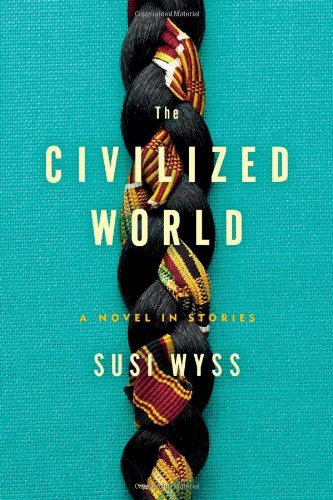
The Cover: I like this cover. Very simple, it just depicts hair braided with fabric, which makes you think of the main central character Adjoa, who is a hair stylist.
Content Rating: A very clean book. I can't recall any vulgarity and only perhaps one brief sexual situation.
My final word: A beautiful, stirring melange of stories, I would strongly recommend this one to everyone.
Buy Now:
My Rating: 8.5 out of 10
Disclosure:
I received a copy of this book for review from Henry Holt and Company, in exchange for my honest opinion. I was not financially compensated in any way, and the opinions expressed are my own and based on my observations while reading this novel.
A rich and luminous novel about three generations of women in one family: the love they share, the dreams they refuse to surrender, and the secrets they hold
Samantha is lost in the joys of new motherhood—the softness of her eight-month-old daughter's skin, the lovely weight of her child in her arms—but in trading her artistic dreams to care for her child, Sam worries she's lost something of herself. And she is still mourning another loss: her mother, Iris, died just one year ago.
When a box of Iris's belongings arrives on Sam's doorstep, she discovers links to pieces of her family history but is puzzled by much of the information the box contains. She learns that her grandmother Violet left New York City as an eleven-year-old girl, traveling by herself to the Midwest in search of a better life. But what was Violet's real reason for leaving? And how could she have made that trip alone at such a tender age?
In confronting secrets from her family's past, Sam comes to terms with deep secrets from her own. Moving back and forth in time between the stories of Sam, Violet, and Iris, Mothers and Daughters is the spellbinding tale of three remarkable women connected across a century by the complex wonder of motherhood.
Rae Meadows is the author of Mothers and Daughters, Calling Out, which received the 2006 Utah Book Award for fiction, and No One Tells Everything, a Poets & Writers Notable Novel. She lives with her husband and two daughters in Minneapolis, Minnesota.
Awards and Citations:
Honorable Mention, Anne Powers Book-Length Fiction Prize, 2008
“Notable Novel” selection, Poets & Writers, 2008
First Prize, Harry W. Schwartz Bookshops Short Story Contest, 2008
Winner, Utah Book Award for Fiction, 2006
“Best Books of the Year” selection, The Chicago Tribune, 2006
One of five Poets & Writers “Debut Writers to Watch,” 2006
“Must Read” selection, Entertainment Weekly, 2006
Barnes & Noble Discover Great New Writers selection, 2006
Book Sense Notable Book, 2006
First Prize, Authors in the Park Short Story Competition, 2000
Runner-up, The Mississippi Review Fiction Prize, 2000
Sam was hungry for pound cake. Or at least for the making of it, for the recipe's humble simplicity-- one pound each of flour, butter, eggs, and sugar-- which had a certain elegance.
Town/Location/Environment:
A portion of this book took place in my neck of the woods here in south Florida. In fact, my town of Fort Myers is even mentioned a couple of times, as well as neighboring Sanibel, a resort island that I visited just a few weeks ago.
Other parts of the story take place in New York, Wisconsin, and a train ride across the country.
You know, I’m not a mother, but I am a daughter. And even my mother has begun to send me “Mother’s Day” cards, because although I am 41, divorced and childless, and it appears I will likely never birth a child, she says I am still a “mother” to many in the world and care for many. I'm a mother at heart, if not in function. So I could identify with this book and its characters on many levels.
There was a lot for me to relate to in this book, despite my not having children.
Her mother had offered gruff hugs and the occasional kiss on the top of the head as comfort, usually accompanied by, "Buck up, Iris. It's not that bad." Nothing, in her mother's eye, had ever been that bad. Not the chickenpox, or cod liver oil, or a sprained ankle, or a dead bird, or a broken heart. (p. 127)
That her children were not close wasn't surprising, given their ten-year age separation, but it was still a disappointment. (p. 176)
(It was actually a 6-year age separation for me, not 10)
This story was about three generations of women. Grandmother Violet, mother Iris and daughter/granddaughter Sam. I think that Violet as a young girl was my favorite character, although I also loved that of Iris at the end of her life as well.
This book perfectly captured the stereotypical mother-daughter relationship:
She felt a momentary pique-- she ordered the same thing everytime-- but, as she reminded herself, this was not the stuff of tragedy. It did not have to be symbolic or weighted or tucked away to add to a pile of resentments. It was just dinner. (p. 230)
Quotes:
Iris decided that her birthday would be a good day to die. That gave her three more weeks. (page 34)
She had always thought cancer would be a banal way to go, but in fact it felt personal, almost intimate, an insidious march beneath the surface of her skin. (page 34)
Her mother had been tough and capable, a woman who’d done man’s work readily and never complained. She didn’t talk about herself and seemed to have no needs of her own. “How is it you are my daughter?” she said sometimes to Iris, who’d been lazy at chores, a girl given to daydreams and wandering. (page 36)
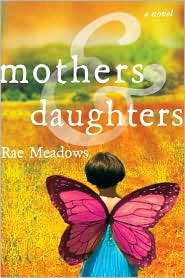
The Cover: I like the cover, which has a little girl wearing butterfly wings standing in a field. What I really like is the fact that it came packaged in a special cover that made it look like a box, which ties into the story.
My final word: This book was very easy to read, and often stirred my emotions. I would love to try something else by author Rae Meadows, and would recommend this book in a heartbeat!
My Rating: 8 out of 10
Disclosure:
I received a copy of this book for review from Henry Holt Publishing in exchange for my honest opinion. I was not financially compensated in any way, and the opinions expressed are my own and based on my observations while reading this novel. The book that I received was an uncorrected proof, but I confirmed that the quotes mentioned were included in the actual published version.
Madeline, Avery, and Nikki are strangers to each other, but they have one thing in common. They each wake up one morning to discover their life savings have vanished, along with their trusted financial manager- leaving them with nothing but co-ownership of a ramshackle beachfront house.
Throwing their lots in together, they take on the challenge of restoring the historic property. But just as they begin to reinvent themselves and discover the power of friendship, secrets threaten to tear down their trust-and destroy their lives a second time.
Pub. Date: May 2011 Publisher: Penguin Group (USA) Format: Paperback , 432pp ISBN-13: 9780425240861 ISBN: 042524086X
About the Author from her own bio
All of my class pictures from Sunshine Elementary School are displayed at the Gulf Beaches Historical Museum on Pass-a-Grille,” says Wendy Wax, speaking about her childhood in St. Pete Beach, Florida. “Fish Broil was the big event every fall and the best days were when we had recess or art class on the beach, but what I remember best is running loose with my friends and exploring every inch of the beach we called our own. Is it any surprise it’s still one of my favorite places in the world? Or that it ended up as the setting in one of my books? It was bound to happen someday.”
Someday came when Wendy began reading about how the lives of so many people, from so many different walks of life, changed dramatically as a result of Bernie Madoff’s Ponzi scheme. It wasn’t long before she was imagining a scenario in which three women face bankruptcy at the hands of an unscrupulous money manager. At the end of the day, these three strangers discover that all that’s left of their savings is shared ownership of a once-glorious beachfront mansion. They’re faced with a choice. They can cut their losses and sell for whatever amount of money they can get, or—in a bid for solvency—accept the backing of a local contractor in order to restore the historic property themselves, bit-by-backbreaking bit.
The basics of her plot and the themes Wendy imagined—women facing adversity, making choices, redefining themselves and discovering the strength of friendship—gave her a wide range of possible settings for TEN BEACH ROAD. When it came time to embrace ambiance, architectural styles, and local color, she chose a place she knows well, her hometown of St. Pete Beach. It was right for so many reasons. Its tropical climate, dual cultures of vacationers and residents, and even the current real estate market fit her story well, and presented challenges her characters might not have faced elsewhere. Of course, it also gave Wendy an opportunity to indulge in researching the Mediterranean-Revival architectural style she so admires and the history of the area, as well as to share her pleasure in magnificent Gulf sunsets and some of her favorite spots in Historic Pass-a-Grille.
Among her fondest memories are visits to her local library. Wendy read voraciously as a child, becoming fast friends with Nancy Drew and Anne of Green Gables. Her love affairs with language and storytelling paid off beginning with her first shift at the campus radio station while studying journalism at the University of Georgia.
Wendy returned home, graduated from the University of South Florida and then worked for the Tampa PBS affiliate, WEDU-TV, behind and in front of the camera. Her resume includes on air work, voiceovers and production work on a variety of commercial projects and several feature films. She was best-known in the Tampa Bay area as the host of Desperate & Dateless, a radio matchmaking program that aired on WDAE radio, and nationally as host of The Home Front, a magazine format show that aired on PBS affiliates across the country.
The mother of a toddler and an infant when she decided to change careers, Wendy admits it may not have been the best timing in terms of productivity. “I’m still not certain why I felt so compelled to write my first novel at that particular time,” she says, “but that first book took forever.” Since then she’s written six others, including Magnolia Wednesdays, the Romance Writers of America RITA Award finalist The Accidental Bestseller and Single in Suburbia. Her novel 7 Days and 7 Nights was honored with the Virginia Romance Writers Holt Medallion Award. Her work has been sold to publishers in ten countries and to the Rhapsody Book Club, and her novel, Hostile Makeover, was excerpted in Cosmopolitan magazine.
Wendy lives in Atlanta, which she has called home for 14 years. A former broadcaster, she spends much of her non-writing time speaking to writer’s groups and book clubs, enjoying time with her husband and sons, and visiting her family in St. Pete. She continues to devour books.
Three women from very different backgrounds find themselves thrown into a common situation after they all become victims of a Ponzi scheme and lose everything, except for a single rundown beach house in south Florida of which they learn they are co-owners. Knowing this is their only shot to survive, they work together to renovate Bella Flora and get her ready for the market.
Town/Location/Environment:
This story takes place in Pass-a-Grille, FL, a little north of Tampa (and therefore just a couple of hours north of me!) A Mediterranean Revival-style home located on the beach in a small town, and I imagine it looked a lot like this...
I liked this book. It was a simple story- there weren’t any great mysteries to keep me on my toes- but the characters were relatable, with interspersed moments of emotion and levity.
There is something for everyone to identify with in this book: painful childhoods, the trials of motherhood and marriage, loss, heartbreak, sexual tension that expresses itself in a combative nature, economics, strained family ties, and on and on.
This book is written in an easy-to-read style. There’s no need to interpret the meaning of things, no symbolism to unravel. It simply gets to the heart of the matter.
I didn’t really identify too much with any woman individually. However each of the women are a piece of me. Atleast each of the main characters, Maddie, Nichole and Avery. I could identify with Maddie’s nurturing, maternal side, with Nichole’s tough exterior, with Avery’s strong will. These were women that I could like and spend time with (and, in fact, did spend time with through the course of this story). If I had to pick one that I identified most with, it would probably be Nichole. She’s a little more spoiled and more used to the good things in life than me, but the way she presents a tough exterior to the world that masks a softer side that is trying to do the right thing is something that I can relate to, as well as identifying with living in poverty as a child (although my mother was very good at hiding the fact that we were living below the poverty level. She’s one of those people that CAN squeeze blood from a turnip, and would get everything possible out of nickel, and then some!).
Content Rating: There was some occasional vulgarity, but it was far and few between. Mild sexuality. I’d give it a strictly PG-13 rating.
My final word: The only real "negative" that I have (which wasn't significant enough to really be a negative) is that while I enjoyed the story, I found the ending slightly less than satisfying. I can’t get into “why” without involving spoilers, but suffice to say that the ending was “okay”, but not totally fulfilling for me.
If you like stories of small towns, friendship, family and trials and tribulations (or if you like the works of Karen White), give this one a try. This was my first experience with author Wendy Wax, and I would be happy to give another of her works a shot in the future. It's a solid story, and a fine read!
My Rating: 7.5 out of 10
Disclosure:
I received a copy of this book to review through Joan Schulhafer Publishing & Media Consulting, in exchange for my honest opinion. I was not financially compensated in any way, and the opinions expressed are my own and based on my observations while reading this novel. The book that I received was an uncorrected proof.
I didn’t know that people come into our lives, and sometimes, if we’ re terribly lucky, we get the chance to love them, that sometimes they stay, that sometimes you can, truly, depend on them.
Cathie Beck was in her late thirties and finally able to exhale after a lifetime of just trying to get by. A teenage mother harboring vivid memories of her own hardscrabble childhood, Cathie had spent years doing whatever it took to give her children the stability— or at least the illusion of it— that she’ d never had. More than that, through sheer will and determination, she had educated them and herself too. With her kids in college, Cathie was at last ready to have some fun. The only problem was that she had no idea how to do it and no friends to do it with. So she put an ad in the paper for a made-up women's group: WOW . . . Women on the Way. Eight women showed up that first night, and out of that group a friendship formed, one of those meteoric, passionate, stand-by-you friendships that come around once in a lifetime and change you forever . . . if you’re lucky.
About the Author
from the back cover
Cathie Beck is a Denver-based journalist and creative writer. She contributes to a number of publications and to KUVO radio in Denver. She is the recipient of writing awards from both the Louisiana and Denver Press Women's Clubs, and the Scripps-Howard Award for Excellence in Journalism. She holds an M.A. in Creative Writing from the University of Colorado at Boulder.
My Thoughts
We are hurtling north of Denver on Interstate 25 in Denise's death-trap, bottle-cap excuse of a car, at eight-three miles per hour, with the plan to stalk Jerry Jeff Walker of "Mr. Bojangles" and "Up Against the Wall Redneck Mother" fame.
This is how we are introduced to our two main characters, Cathie Beck and Denise Katz: hurtling down an interstate as the two hurtled through the second stages of their lives.
This book is a memoir (a fact that I somehow missed and realized about a third of the way through). It isn't supposed to be a work of fiction, but a memoir of a friendship. Cathie Beck has had a tough life, raised in an unstable home, pregnant and married as a teen, abandoned by her husband with two children to raise at age 21, she has clawed her way through life. Now, nearing the age of 40, she finds herself an empty-nester in need of friends and begins a woman's group called WOW (Women on the Way). At the first meeting of their new group, Cathie meets Denise Katz: forward, unapologetic, brash, and Cathie doesn't think she likes this woman very much. But then she changes her mind, and finds she likes her very much, and the two begin a many-year friendship that navigates the difficulties of Denise's struggles with Multiple Sclerosis.
Cathie appears to be honest and real. She almost begrudgingly becomes friends with Denise, who is perhaps unlikeable to many, but I found that I liked her. Perhaps that is because I can identify with her. Denise has a warmth and heart that is kept very well hidden, but she also displays an evident strength.
This book was a very easy read. Certain writing styles are just very conversational and comfortable for me, and allow me to whiz through much more quickly than with strongly narrative or "stodgy" writing.
I sort of delayed picking this one up, because I just wasn't sure that it would be able to grab me. I was pleasantly surprised. It built and held me most of the way. However I did find the final 100 pages to be less captivating, and began to lose me, and the ending was less than satisfying. But, given that it is a memoir, that may be something that cannot be helped-- it ended as it ended. You can't change life.
One thing that confused me was that the beginning had nothing to do with the ending. The way that the opening chapter is laid out, I always thought that the end of the book would pick up where it left off and the story would end. But that isn't what happened. The story never really returned to that moment again, aside from a very brief mention of Wyoming at the end of the book. So that only added to disappointment in the ending. It's as if the beginning set me up for an ending that never came as expected.
For the most part, this was an enjoyable story.
Quotes:
"My loneliness had grown out of poverty and her ugly sisters- shame and desperation. It was hard to shrug off." p. 12
"Many people were afraid of Denise, but not me. Many people mistook her ballsiness for bitchiness, her inquisitiveness for nosiness, her brevity for rudeness." p. 292
Town/Location/Environment:
Much of the story takes place in beautiful Colorado, but the locale takes a backseat and plays very little into the storyline.
This book in five words: Honest, heart-wrenching, real, roller-coaster ride.
My Rating: 7.5 out of 10
Disclosure: I received a copy of this book to review through the LibraryThing Early Reviewers, in exchange for my honest opinion. I was not financially compensated in any way, and the opinions expressed are my own and based on my observations while reading this novel.
Falling Home is a coming home story about forgiveness and acceptance, and of finding love in the most unexpected of places. Home is where the heart is, but Cassie Madison prefers to think of it as a place where one is born, then outgrows, along with skinned knees and childhood dreams. A humiliated Cassie left Walton, Georgia for Manhattan fifteen years before, vowing never to return.
And then her sister calls. Their father is dying and wants Cassie to come back home. When Cassie's father dies, saddling her with the family's antebellum home and letters hinting of an unknown sibling, Cassie finds herself sinking into the red Georgia clay like quicksand. Reluctantly, Cassie is pulled into the lives of her sister and family, and that of Sam Parker, the town doctor. When tragedy strikes, Cassie is led to discover that home is a place that lives in one's heart, waiting with open arms to be rediscovered.
After playing hooky from school one day in the seventh grade to read Gone With the Wind, I knew I wanted to be a writer—or become Scarlett O'Hara. In spite of these aspirations, I grew up to pursue a degree in business and graduated cum laude with a BS in Management from Tulane University.
I have always been a voracious reader and was encouraged by my teachers to write ever since elementary school. Writing a book was always in the back of my mind, but definitely something I'd "do later when I have time."
One day in 1996 when my children were just babies, I decided it was time and started writing my first book. When I had a few chapters written, I sent it in to a writer's contest and by some miracle it won. The finalist judge was a New York literary agent and she offered to represent me. That first book, In the Shadow of the Moon, was sold and then published in 2000. It was a double finalist in Romance Writers of America's prestigious RITA award.
I have since published eleven award-winning novels, including The Girl on Legare Street which debuted at #31 on the New York Times bestseller list. I have four more books scheduled including the next two books in the Tradd Street series (in 2011 and 2013, respectively). My next Southern women's fiction ("grit lit") novel, On Folly Beach, will be published in May 2010.
While growing up, I lived in London, England and am a graduate of the American School in London. I currently live in sunny Georgia with my husband and two children. When not writing, I spend my time reading, singing, scrapbooking, carpooling children and avoiding cooking.
I love hearing from readers. Please email me at AuthorKarenWhite@aol.com or write to Karen White, PO Box 623, Roswell, Georgia 30077.
Q&A with the Author
Talking with Karen White about hometowns, writing and her new novel, FALLING HOME—
Karen, many people spend their lives trying to get away from their hometowns. You’ve spent much of your life searching for one. Why? What does “hometown” mean to you?
A “hometown” is what all my cousins had—a place where they went to school with the same people from kindergarten through high school, where everybody knew their name—at school, at the grocery store, getting a traffic ticket. I’m sure the grass is always greener and all that, but I’ve always thought that to have a place like that to go home to had to be the best part of life.
You’ve lived in major cities and metropolitan areas—including in the UK and South America. Yet, you’ve coveted your grandmother’s town, Indianola, Mississippi, for much of your life. What do you find to be the best about each—the cities you’ve lived in and the towns you’ve coveted?
The places I’ve lived in have given me a wonderful global perspective—and made me appreciate what we have here in the States (and if you didn’t think you’d miss 24 hour stores, you’re in for a big surprise!). It also allowed me to do an almost anthropological study of my Southern relatives and their hometowns, enabling me to see them as an outsider would. If I’d grown up amongst them, I wouldn’t be able to appreciate their unique qualities, not to mention their accents.
Where did you get the inspiration for Walton, the fictional town at the center of FALLING HOME? Which came first—the plot and its conflict looking for a home? Or “Walton” followed by thoughts of what you could make happen there?
Nothing comes to me sequentially, but usually a setting and the main protagonist and her “problem” are the first things that settle in my mind when starting a book. I believe (to a point) in the adage of “write what you know.” I’d never lived in a small Southern town, but I’d visited them enough growing up to believe I could write about one as if I had. So I made up Walton—but it’s based on several real
towns including Indianola, Mississippi and Monroe, Georgia.
You’ve explored family conflict in many of your novels, you deal with a range of family dynamics, and you cross gender and generations in your work. It seems mother and daughter, and sister-to-sister relationships have most frequently played a role in your books. Do you agree? And, if so, what pulls you in that direction?
I was raised with three brothers so of course I always wanted a sister. I spent a lifetime studying the sister relationships of my mother and my aunts, as well as those of my friends with sisters. I think it was inevitable that I people my stories with sisters.
As for the mother-daughter relationship, well, being a mother AND daughter I can definitely relate on a personal level. It is, I believe, the most complex of all relationships. It’s somewhat reassuring to know that there’s at least one thing in my books that I don’t have to go very far to research!
Can you imagine any situation in which you would cut off relationships with family members as Cassie did?
I’m a middle child, meaning I avoid conflict at all cost. If somebody slighted me, I would go to great lengths to get that person to like me. So, no, I can’t imagine what circumstances would compel me to do that. However, if I’d been in Cassie’s shoes, I don’t know if I’d behave any differently.
FALLING HOME is so compelling in its use of unrequited love—Cassie’s for Joe, Sam’s for Cassie, Harriet’s for Cassie, and the decades Miss Lena spent alone. What makes these emotions so powerful, and so difficult to diffuse?
I think it’s because we can all relate to a broken heart which is, at any level, unrequited love. It’s so painful to love someone or want something so badly, and knowing that the desire is not returned. It is the most elemental pain—and can start as early as not being picked for a kickball team on the school yard playground.
In FALLING HOME, you don’t seem to dwell on the negative, even as you tackle your characters' conflict, pain, disappointments and challenges. Somehow you manage to maintain emotional and sometimes polarizing plot threads while still emphasizing positives such as loyalty, love, and triumph. Do you think this is true? And is this something you’re conscious of doing in this and other of your novels?
I don’t know if it’s a conscious thing; I do know that my characters tend to emulate the same kinds of characteristics I try to maintain in my real life. I don’t believe that a disappointment is the end of the road, or that loss negates any of life’s meaning. I’ve also learned—although usually kicking and screaming—that all of life’s challenges are learning experiences and that life isn’t fair. Deal with it and move on. It sure beats the alternative.
For readers who are first discovering you through FALLING HOME, please recommend which of your novels they should read next. And—for those of us who have been happily following Melanie and Jack from THE HOUSE ON TRADD STREET and THE GIRL ON LEGARE STREET—when will we see them again? Lastly, what is going to hit bookshelves next? And when?
Hopefully, the sequel to FALLING HOME, AFTER THE RAIN, will be rereleased in the near future. In the meantime, I’d suggest LEARNING TO BREATHE, another book set in a small Southern town, but this one in Louisiana.
As for the Tradd Street series, there will be two more books out in 2011 and 2013, respectively. I’ve already started writing number 3, and it is tentatively entitled THE TURRET ON MONTAGU STREET.
My next book, out in May 2011, will be THE BEACH TREES, set in pre-Camille New Orleans and post-Katrina Biloxi, Mississippi.
Thank you, Karen!
My Thoughts
Cassie Madison was a small town girl with big city dreams. After a she learns that her sister and her boyfriend have fallen in love and eloped together, she runs away from her small town of Walton to chase those big dreams, never giving it a second thought until the phone call comes that changes everything.
Returning to her childhood home 15 years later to attend to her ailing father, Cassie must finally face old hurts and learn to forgive and forget, or run away once more. But this time there are new ties to hold her to Walton. Will those ties be strong enough to finally tether her down?
I can always tell that I’m really “getting into” a story when I can see it playing out in my head. And this one very quickly took on a life of its own on the “big screen” in my mind. I soon saw scenes from the movie Hope Floats flashing in my mind, glimpses of town characters, the city streets. Almost immediately the role of Dr. Sam Parker was played by “Marlboro Man” (the husband of Ree “Pioneer Woman” Drummond) in my mind. (I used to have a photo of Marlboro Man here, but worried that it was probably breaching copyright on Pioneer Woman. So I have chosen to remove it. Go here to see the vision in my head for Dr. Sam Parker.)
I love Cassie Madison. She is tough and tenacious, and has lost touch with her soft side long ago. However returning to her family and finding herself surrounded by her nieces and nephew begins to soften her up as she gets to play "aunt" for the first time. I sort of identify with Cassie, and I even posted recently on my Facebook status:
"Is it bad to say that I identify with the character in the book that I'm reading that is described as "stubborn, bullheaded, and mean to boot"?
Cassie returns to find an old school chum is now "Doctor" Sam Parker. And it seems that Sam prefers to spend his time acting as a thorn in Cassie's side. This, of course, brings some nice sexual tension to a storyline that is often wrought with emotion.
Cassie must finally deal with the guilt of abandoning her family for all of those years, and the pain she endured as a result of the relationship between her sister Harriet and old boyfriend Joe. And along the way there is a little mystery, a little levity, and a lot of sincere emotion.
I loved this story. It had such richness and depth. It hangs in one’s mind like a good wine hangs on the tongue. It's full of truth and regrets and family and love. This story has heart.
Falling Home goes on sale November 2, 2010!
My Rating: 9 out of 10
Thanks to Assistant Publicist Joy for a copy of this book in exchange for my honest review.
Blogging since 2009, I'm a south Florida girl living in the home of mudding and hog hunting. Just trying to survive amid too many books and vastly outnumbered by a ZooCrew, hoping not to wind up a trophy head mounted on someone's wall in the process. Lover of lists, an eternal procrastinator, and really just a flower child at heart.





 After playing hooky from school one day in the seventh grade to read Gone With the Wind, I knew I wanted to be a writer—or become Scarlett O'Hara. In spite of these aspirations, I grew up to pursue a degree in business and graduated cum laude with a BS in Management from Tulane University.




 Posts
Posts